
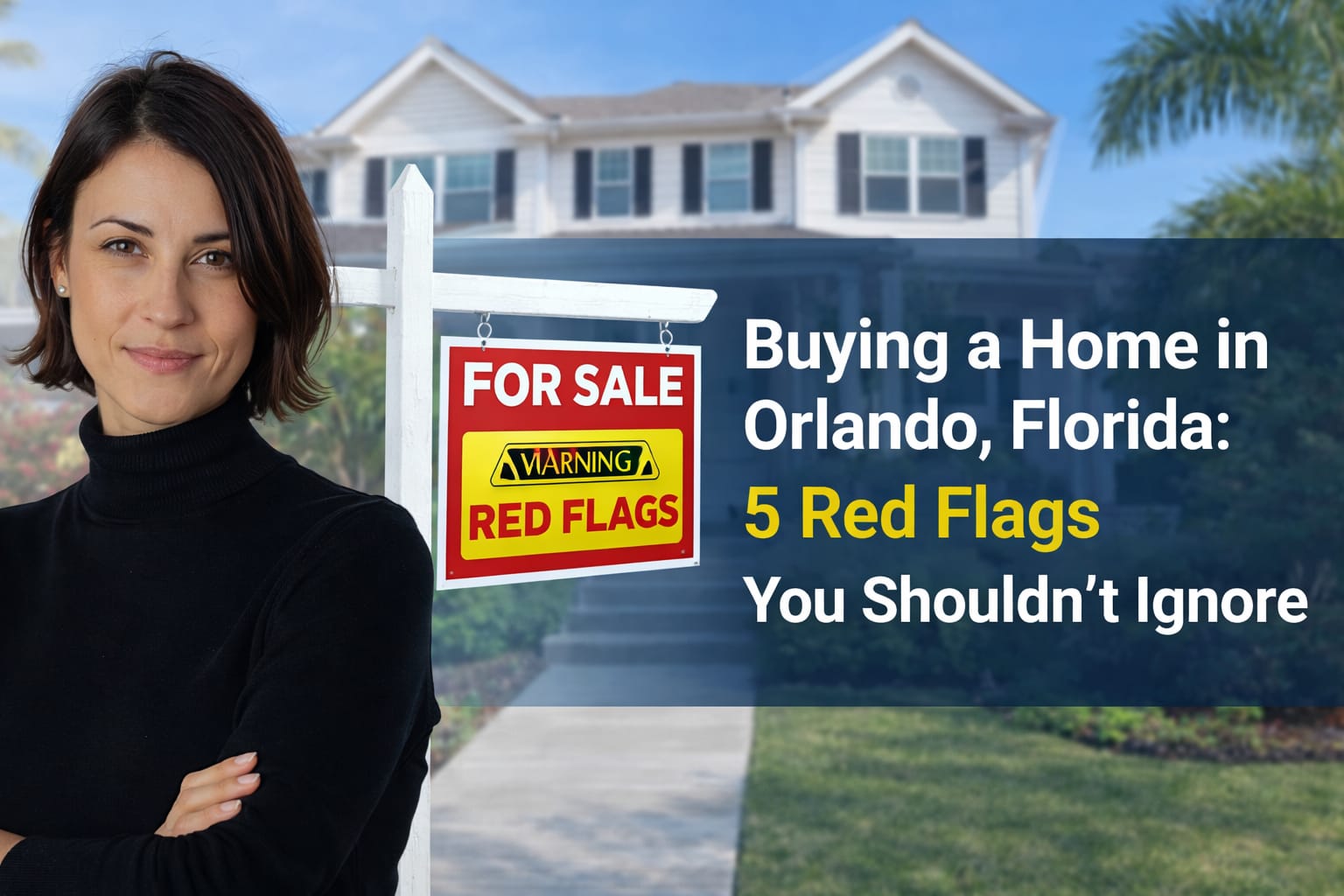
¿Vas a comprar una casa en Orlando, Florida? ¡5 señales de alerta que no debes ignorar!

Top 5 Red Flags When Buying a Home

The top 5 red flags when buying a home are: (1) water intrusion or poor drainage, (2) roof near end-of-life, (3) unsafe or outdated electrical, (4) termite/pest activity, and (5) unpermitted or sloppy renovations. In Orlando, these often affect insurance, financing, and repair costs—so verify them early and negotiate smart.

Buying a home is exciting—until it isn’t. In Orlando and across Central Florida, a “cute” house can hide expensive problems that show up right after closing. The goal isn’t to be paranoid; it’s to be prepared. This guide breaks down the top 5 red flags when buying a home, how to spot them fast, and what to do next so you don’t buy a money pit.

If you want a broader start-to-finish overview, here’s a solid reference: Realtor.com – Buying Guide.

What counts as a “red flag” when buying a home?

A red flag is a warning sign that the property may have a costly, recurring, or safety-related issue—or a problem that can derail financing, insurance, or resale value. Some red flags are deal-breakers. Others are negotiation points, as long as you verify the cause and price the fix correctly.

The Top 5 Red Flags When Buying a Home (Orlando Focus)

1) Water intrusion, staining, or poor drainage (the most common budget killer)

Water problems are rarely “just cosmetic.” In Central Florida, water can come from roof leaks, plumbing leaks, poor grading, clogged gutters, or a yard that funnels rain toward the foundation. If you see stains, musty smells, bubbling paint, warped baseboards, or persistent dampness, assume there’s a cause that needs proof—not guesses.

  • What to look for during a showing: ceiling stains, fresh paint patches in one area, musty odor, soft drywall, damp garage corners, ponding water in the yard after rain, algae streaks on exterior walls.
  • Why it matters in Orlando: moisture can trigger mold conditions, damage framing/drywall, and create insurance headaches. Water history can also affect future resale buyer confidence.
  • Smart move: ask for disclosure details, get a thorough inspection, and if needed, bring in a specialist (roof, plumbing, drainage, mold assessment) before you remove contingencies.

Competitor coverage commonly flags water damage and flooding as major inspection concerns, often tied to hidden mold and compromised systems. Use that as your baseline—then go deeper with Orlando-specific drainage and roof verification. (See similar emphasis on water-related red flags.)

2) Roof near end-of-life or obvious roof defects

In Florida, the roof isn’t just a maintenance item—it’s a financing and insurance item. A roof that’s old, curling, missing shingles, visibly patched, or sagging can mean expensive replacement and possible difficulty getting affordable coverage.

  • What to look for: missing/curling shingles, soft spots, dark staining, sagging lines, excessive granules in gutters, interior ceiling stains, daylight in attic (if accessible).
  • Orlando reality check: storms, heat, and humidity accelerate wear. Even if the home “shows well,” a questionable roof can change your monthly payment through insurance costs.
  • Smart move: verify roof age with permits/receipts, consider a roof inspection, and negotiate credits or repairs when the numbers justify it.

3) Outdated or unsafe electrical (can be a safety issue AND an insurance issue)

Electrical red flags can be expensive and sometimes dangerous. Older homes may have outdated panels, questionable DIY wiring, overloaded circuits, or wiring types that insurers/lenders scrutinize.

  • What to look for: flickering lights, warm outlets/switches, buzzing at the panel, double-tapped breakers, messy wiring in the panel, lots of extension cords used as “permanent” solutions.
  • Why it matters: electrical issues can create fire risk, trigger repair requirements, and slow down closing if the insurer or lender demands updates.
  • Smart move: have the inspector call out concerns clearly and get an electrician quote before you commit. Use real numbers in negotiations.

4) Termites / WDO activity or pest conditions

In Florida, pests are not theoretical. Termites and other wood-destroying organisms (WDO) can cause serious damage, and some evidence can be subtle—especially if a home was recently cleaned up for sale.

  • What to look for: mud tubes on exterior walls/foundation, damaged or hollow-sounding wood, piles of wings near windowsills, soft baseboards, active moisture (pests love it).
  • How it works in Orlando: WDO inspections are common in transactions. If the general inspection hints at activity, a dedicated WDO inspection and any needed treatment/repairs should be addressed before closing.
  • Smart move: don’t ignore it. Get the proper inspection report and clarify who pays for treatment/repairs in the contract.

5) Unpermitted work, sloppy renovations, or layout conversions that raise questions

Fresh paint and new flooring can be great—unless they’re hiding poor workmanship, water damage, or unpermitted changes. In Orlando, I see buyers get burned by garage conversions, added “bedrooms,” DIY electrical/plumbing, and additions without a clear paper trail.

  • What to look for: uneven tile, wavy floors, lumpy drywall, mismatched finishes, odd wiring/fixtures, doors that don’t close, “bonus rooms” with no clear HVAC/permits, or a remodel that looks rushed.
  • Why it matters: unpermitted work can create safety issues, appraisal problems, insurance complications, and resale headaches. It can also limit what a lender will finance.
  • Smart move: request documentation, verify permits when appropriate, and price the risk. If the seller can’t support what was done, negotiate accordingly.

Red Flags Summary Table (Skimmable)

Red Flag How to Spot It Fast Por qué es importante What to Do
Water intrusion / poor drainage Stains, musty smells, bubbling paint, yard ponding Mold risk, structural/material damage, insurance concerns Inspect + specialist if needed; negotiate with real quotes
Roof issues / age Missing shingles, sagging, staining, patchwork Big-ticket repair + insurance pricing/eligibility Verify age/permits; roof inspection; credits/repairs
Unsafe/outdated electrical Flicker, warm outlets, messy panel, DIY wiring signs Safety + lender/insurer repair demands Electrician quote; negotiate; fix before closing if required
Termites/WDO/pests Mud tubes, damaged wood, wings, moisture hotspots Hidden damage and ongoing risk WDO inspection; treatment/repairs negotiated in writing
Unpermitted/sloppy renovations Rushed finishes, odd additions, layout conversions Appraisal/insurance/resale problems Request documentation; permit verification; price risk

Practical Steps: What to Do When You Spot a Red Flag

  1. Document it: take photos/notes during the showing so you remember what you saw.
  2. Ask direct questions: “What caused this stain?” “When was the roof replaced?” “Who did the remodel?”
  3. Get the right inspections: general home inspection first, then specialty inspections (roof, sewer/plumbing, electrical, WDO) if the report suggests it.
  4. Use the inspection contingency wisely: it’s your leverage to renegotiate, request repairs, or walk away if needed.
  5. Negotiate with numbers, not opinions: quotes/estimates are what move a seller, not a vague concern.

Checklist: Top 5 Red Flags When Buying a Home (Bring This to Showings)

  • Any water staining, musty odors, or signs of recurring moisture?
  • Does the roof show wear, patching, sagging, or interior leak evidence?
  • Any electrical warning signs (panel mess, flicker, warm outlets, DIY wiring clues)?
  • Any termite/WDO indicators (mud tubes, damaged wood, wings) or obvious pest conditions?
  • Any “too good to be true” remodel areas that look rushed or unverified?

Pros and Cons of Buying a Home With Red Flags

Ventajas

  • You may negotiate a better price or seller credits if issues are verified.
  • Some problems are manageable if you understand scope and cost upfront.
  • Less competition sometimes means more favorable terms for buyers.

Contras

  • Repair costs can blow up your budget fast if the issue is bigger than it looks.
  • Insurance and financing can get complicated (or delayed) with certain defects.
  • Unpermitted work can create long-term resale and liability problems.

Common Buyer Mistakes (That Cost Real Money)

  • Falling in love with the staging: pretty furniture doesn’t fix a bad roof.
  • Skipping specialized inspections: if the main inspection suggests a risk, confirm it properly.
  • Accepting vague seller answers: “It’s been like that for years” is not documentation.
  • Not budgeting for closing + repairs: review closing costs and cash-to-close early.
  • Waiving protections to “win”: in many cases, that’s gambling with your biggest purchase.

How It Works in Orlando (Local Context You Should Know)

Orlando isn’t one single market—it’s a patchwork of older neighborhoods, new construction communities, lake-adjacent areas, and HOA-heavy subdivisions. That changes what “red flags” look like in real life:

  • Drainage matters a lot: summer downpours expose grading problems quickly. If you can, visit the property after rain or look for signs of recurring ponding.
  • Insurance is part of the deal: roof condition and certain system issues can affect policy cost and availability—sometimes late in the process if you’re not proactive.
  • Permits and renovations: conversions and additions pop up often. When something feels “off,” verifying documentation can save you from inheriting someone else’s shortcut.
  • HOAs are common: rules, fees, and special assessments can change your monthly costs and even what you can do with the property.

If you want to cross-check local services, resources, or city requirements, you can reference City of Orlando.

Money + Market Notes (So You Don’t Buy Blind)

Red flags aren’t only about condition—they also affect your financing strategy and negotiating power. For broader mortgage and housing market context, you can review Freddie Mac – Mortgage Market Data.

And when you’re planning your budget, don’t ignore closing costs. This is one of the cleanest references out there: CFPB – Guía de costos de cierre.

FAQs: Top 5 Red Flags When Buying a Home

1) What are the top 5 red flags when buying a home?

Los cinco grandes son problemas de filtración de agua o drenaje, problemas en el techo, sistemas eléctricos inseguros u obsoletos, actividad de termitas u otros organismos destructores de madera, y renovaciones sin permisos o mal hechas. Estos son comunes porque son costosos, pueden ocultarse y pueden afectar el financiamiento o el seguro.

2) Are foundation cracks always a deal-breaker?

No. Some small settling cracks can be normal. The concern is large, expanding, or unusual cracking patterns, plus doors/windows that don’t align. If you see signs, get a qualified pro to evaluate before you commit.

3) What’s the easiest way to spot water issues during a showing?

Use your eyes and your nose. Look for stains, fresh paint patches in one area, warped trim, and bubbling paint. Smell for mustiness. Outside, look for low spots and ponding near the foundation.

4) Why does roof age matter so much in Florida?

Because the roof can drive insurance cost and approval. A roof near end-of-life can mean higher premiums or required replacement before closing—turning a “good deal” into a costly surprise.

5) What’s “unpermitted work” and why should I care?

It’s remodeling done without the required approvals. It can create safety issues, appraisal problems, trouble getting insurance, and complications when you sell. If a major change was done, documentation matters.

6) Should I still buy a home if the inspection finds red flags?

Sometimes, yes—if the issues are clearly diagnosed and the numbers work. The key is understanding the scope, getting quotes, and negotiating repairs/credits or price reductions in writing.

7) What inspections are most important in Orlando?

Start with a general home inspection. If red flags show up, add specialty inspections (roof, electrical, plumbing/sewer, and WDO/termite). The right inspection depends on what the house is telling you.

8) How do I negotiate after finding red flags?

Negotiate with documentation: inspection findings, specialist reports, and repair estimates. Ask for a credit, price reduction, or specific repairs—whatever best fits your timeline and risk tolerance.

9) What if the seller refuses to fix anything?

Then you decide whether the home is still worth it at the current price. If the risks are big and the numbers don’t make sense, walking away can be the smartest move.

10) Do I need a Realtor for this, or can I handle it myself?

You can do it yourself, but a strong local agent helps you spot patterns, line up the right inspections, negotiate intelligently, and avoid common traps—especially in competitive Orlando submarkets.

Work With Orlando Realty Consultants (Se Habla Español)

If you’re buying in Orlando or anywhere in Central Florida, my job is to help you avoid expensive surprises and negotiate from a position of strength. If a house has red flags, we’ll verify them, price them, and decide the smartest next step—without guesswork.

If you’re looking for a Agente inmobiliario en Orlando who will tell you the truth and protect your downside, call or text 407-902-7750. Let’s make sure the home you love also makes financial sense.

¡Mantengámonos en contacto!

Nuevo cliente potencial de formulario ORC

"*" indica los campos obligatorios

Este campo es para fines de validación y debe dejarse sin cambios.
Trastorno obsesivo-compulsivo*

Una guía para hacer realidad la vivienda propia

Guía para la compra de vivienda en Orlando, Florida: Pasos para comprar inteligentemente

A homeownership guide is a step-by-step plan for buying a home, from setting a realistic budget and improving credit to choosing the right loan, shopping for a home, and closing. In Orlando, it also means planning for insurance, HOA fees, and local market competition so you can buy confidently without stretching too far.

Buying a home is exciting, but it’s also a financial decision that can either build long-term stability or create long-term stress. This guide breaks the process down in plain English, with Orlando-specific realities (prices, competition, insurance, HOAs, and common pitfalls).

What “Homeownership” Really Means (Beyond the Mortgage Payment)

Homeownership is not just “owning” a property—it’s managing a monthly housing cost that includes:

  • Principal + interest (your loan payment)
  • Impuestos sobre la propiedad (often escrowed into your payment)
  • Homeowners insurance (especially important in Florida)
  • Cuota de mantenimiento (common in many Orlando communities)
  • Utilities + maintenance (roof, HVAC, plumbing, appliances, lawn care)

If you plan for the full picture upfront, homeownership feels manageable. If you don’t, it can get tight fast—especially when repairs hit at the same time as rising insurance costs.

Key Concepts Every Buyer Should Understand

1) Debt-to-Income Ratio (DTI)

DTI compares your monthly debt payments to your gross monthly income. Most lenders use DTI to decide how much home you can afford. Even if you “qualify” for a high payment, that doesn’t automatically mean you should take it.

2) Credit Score and Loan Pricing

Your score impacts your interest rate, and your interest rate impacts your payment. Improving your score even slightly can reduce your payment and increase your buying power.

3) Down Payment vs Closing Costs

Many buyers focus only on the down payment. Closing costs are separate and can include lender fees, title fees, escrow items, and prepaid taxes/insurance.

4) Pre-Approval vs Pre-Qualification

  • Pre-qualification is a basic estimate.
  • Pre-approval is stronger—based on documents and underwriting review (varies by lender).

In competitive Orlando areas, strong pre-approval and clean documentation matter.

Step-by-Step Homeownership Guide (Actionable Checklist)

Step 1: Set a realistic monthly budget (not just “max approval”)

  • Pick a monthly payment you can handle comfortably.
  • Leave room for savings and emergencies.
  • Plan for insurance and HOA increases over time.

Step 2: Review credit and clean up the obvious issues

  • Pay down revolving debt (credit cards).
  • Avoid new debt before closing (cars, furniture financing, new cards).
  • Fix errors on your credit report.

Step 3: Choose the right loan strategy

Loan type affects your interest rate, down payment, monthly payment, and upfront costs. Here are reputable resources to learn the basics:

Step 4: Get a strong pre-approval and lock in your plan

  • Provide documents early (pay stubs, W-2s, bank statements).
  • Ask your lender to estimate total cash needed: down payment + closing costs + reserves.
  • Discuss rate lock timing and points (if relevant).

Step 5: Decide your must-haves vs nice-to-haves

In Orlando, buyers who shop with a clear plan win more often. Prioritize what you won’t compromise on (school zones, commute, bedrooms, yard, community rules) and what you can flex (cosmetics, flooring, paint, minor updates).

Step 6: Tour homes fast, but don’t ignore deal-breakers

  • Roof age and condition
  • HVAC age
  • Water heater age
  • Signs of water intrusion or foundation issues
  • HOA rules and fees

Step 7: Make a smart offer (price + terms)

In a competitive market, the “best offer” isn’t always the highest number. Terms matter—financing strength, closing timeline, inspection window, and sometimes appraisal strategy (depending on risk tolerance).

Step 8: Inspections, negotiations, and keeping your deal alive

  • Schedule inspections immediately
  • Ask for repairs or credits based on real findings
  • Keep communication tight between lender, title, and agent

Step 9: Appraisal, underwriting, and final approval

This phase is paperwork-heavy. Avoid job changes, large deposits you can’t document, and new debts until after closing.

Step 10: Closing day and your first 90 days as a homeowner

  • Know your final cash-to-close before wire/closing
  • Transfer utilities and set up mail forwarding
  • Budget for immediate maintenance items

Loan Options at a Glance (Orlando Buyer-Friendly)

Loan Type Ideal para Typical Down Payment Key Trade-Off
FHA First-time buyers, moderate credit As low as 3.5% Mortgage insurance can add to payment
VA Eligible veterans/active-duty buyers Often 0% Eligibility + funding fee rules apply
Conventional Strong credit, flexible options Often 3–5%+ (varies) Rates/PMI depend heavily on credit + down payment
Ayuda para el pago inicial Buyers who qualify by program rules Varía Income/price caps + extra paperwork

If you want a deeper breakdown of “conventional loans”, review that resource and we can map it to your actual budget and target areas in Orlando.

Pros and Cons of Homeownership

Ventajas

  • Equity building: Each payment can build ownership over time.
  • Stability: You control your home (and your long-term housing plan).
  • Potential appreciation: Orlando has strong long-term demand drivers.
  • Personalization: Remodel and upgrade to your preferences.

Contras

  • Upfront costs: Down payment, closing costs, and moving expenses.
  • Maintenance: Repairs can be unpredictable and expensive.
  • Less flexibility: Selling takes time and money.
  • Florida-specific costs: Insurance and some HOA costs can rise.

Common Mistakes That Derail Orlando Buyers

  • Shopping before pre-approval: It wastes time and weakens offers.
  • Falling in love with the payment, not the total cost: HOA + insurance surprises hurt.
  • Ignoring HOA rules: Some restrict rentals, trucks, short-term rentals, or even fences.
  • Overlooking commute reality: Orlando traffic patterns matter—test the drive during peak times.
  • Skipping inspection strategy: You need protection without killing your offer unnecessarily.
  • Buying at the top of your comfort zone: Leaves no room for life events.

How It Works in Orlando, Florida (Local Reality Check)

Orlando is not one single market—it’s a collection of micro-markets. A “great deal” in one area might be overpriced in another depending on:

  • School zones and zoning changes
  • HOA/community rules and amenities
  • Proximity to employment hubs (downtown, Lake Nona, UCF, theme parks)
  • Insurance considerations (age of roof, construction type, claims history)
  • Short-term rental restrictions (by community and local regulations)

Practical example: A home that looks “cheaper” can cost more monthly if the HOA is high or insurance is significantly higher due to roof age. In Central Florida, we evaluate monthly cost, not just price.

Homeownership Readiness Checklist (Quick Skim)

  • I have a stable income and documented funds for closing
  • I understand my monthly payment including taxes/insurance/HOA
  • I have an emergency fund for repairs and surprises
  • I’m pre-approved (not just pre-qualified)
  • I know my top 3 neighborhoods/areas and my non-negotiables
  • I’m avoiding new debt until after closing
  • I have a plan for inspections, repairs, and negotiation

FAQs: Homeownership Guide (Orlando + Central Florida)

1) How much money do I need to buy a home in Orlando?

It depends on your loan type, price point, and closing costs. A safe planning range is down payment + closing costs + a small reserve fund. We can estimate cash-to-close quickly once we know your target price and loan type.

2) Is it better to rent or buy in Orlando right now?

If you plan to stay put for a few years and can afford the full monthly cost (not just the mortgage), buying can make sense. If you need flexibility or your budget is tight, renting might be smarter short-term.

3) What credit score do I need to buy a home?

Minimums vary by loan and lender. Better credit usually means better pricing. Even if you qualify today, improving your score can reduce your payment and expand your options.

4) What’s the difference between FHA and conventional loans?

FHA can be more forgiving with credit and down payment, while conventional often rewards stronger credit with better monthly costs. The right choice depends on your profile and long-term plan.

5) How long does it take to buy a home in Orlando?

From offer acceptance to closing is often 30–45 days (sometimes faster). The bigger variable is how quickly you find the right home and get an offer accepted.

6) Do I need a home inspection in Florida?

It’s strongly recommended. Inspections protect you from expensive surprises. In Central Florida, roof, HVAC, plumbing, and water intrusion concerns should be evaluated carefully.

7) What are typical closing costs for buyers?

Closing costs vary by loan type, lender fees, and escrow items. We can get you realistic estimates early so you don’t get blindsided at the finish line.

8) What should I avoid doing after I’m under contract?

Don’t open new credit, don’t finance furniture, don’t change jobs without talking to your lender, and don’t move money around without documentation. Underwriting cares about stability and paper trails.

9) How do HOAs impact homeownership in Orlando?

HOAs can add monthly costs and restrictions. Some limit rentals, parking, exterior changes, or pets. Always review the HOA docs before you commit.

10) Can you help me pick the best Orlando area for my budget?

Yes. That’s a big part of the job—matching your payment comfort level and lifestyle needs to the right neighborhoods and property types across Central Florida.

Summary: Your Next Steps

  • Set your comfort payment (not just the lender max)
  • Get pre-approved and understand your cash-to-close
  • Choose 2–4 target areas in Orlando/Central Florida
  • Tour homes, move fast, and negotiate based on facts
  • Protect yourself with inspections and smart contract terms

Call to Action: Orlando Realty Consultants

If you want a real plan (not guesswork), I can help you map out a clear path from “thinking about buying” to getting keys—without overextending yourself.

  • Business: Orlando Realty Consultants
  • Teléfono: 407-902-7750
  • Área de servicio: Florida Central

Check out my Google Reviews

¡Mantengámonos en contacto!

Nuevo cliente potencial de formulario ORC

"*" indica los campos obligatorios

Este campo es para fines de validación y debe dejarse sin cambios.
Trastorno obsesivo-compulsivo*

Los mejores vecindarios emergentes en Orlando (Guía para compradores de 2026)

Orlando cambia rápido. Un año una zona se siente “tranquila y local”, al año siguiente tiene nuevos cafés, obras viales y múltiples ofertas por el mismo bungalow. Esta guía analiza detalladamente mejores barrios emergentes en Orlando utilizando un marco sencillo y fácil para el comprador, para que puedas detectar el impulso real (sin rodeos) y tomar una decisión inteligente.

Los mejores vecindarios emergentes en Orlando son áreas que experimentan una renovación constante, nuevos negocios locales, mejoras en la infraestructura y una fuerte demanda por parte de los compradores, al tiempo que siguen ofreciendo un mejor valor que los códigos postales que ya han llegado a su límite máximo. En 2026, muchos compradores están observando Milk District, Audubon Park, Mills 50, Ivanhoe Village, SoDo, Curry Ford West, Lake Nona y Horizon West en busca de crecimiento, estilo de vida y reventa a largo plazo.

Lo que realmente significa “emergente” en Orlando

En bienes raíces, “emergente” debería significar un cambio medible, no solo titulares de moda. En Orlando, los mayores indicadores son:

  • Actividad de renovación: casas más antiguas que están siendo renovadas (no solo remodelaciones de inversores, sino también mejoras hechas por los propios dueños)
  • Crecimiento de negocios locales: restaurantes independientes, café, cervecerías, mercados y eventos de vecindario
  • Mejoras en la infraestructura: proyectos viales, cruces más seguros, conexiones de senderos, parques y paisajes urbanos
  • Combinación de viviendas: una combinación de viviendas para jóvenes, casas adosadas y algunas construcciones nuevas en espacios vacíos, sin perder el carácter del vecindario
  • Señal de demanda las casas con el precio correcto no se quedan eternamente en el mercado, ni siquiera en uno más lento

Si eres nuevo en la zona, comienza con una descripción general de Orlando, Florida y cómo funcionan los patrones de crecimiento de la ciudad (empleos, carreteras, centros principales).

Cómo usar esta guía (marco simple)

Para cada vecindario a continuación, verá:

  • Por qué está subiendo: qué es lo que realmente está cambiando
  • Ideal para: a quién suele encantarle (compradores por primera vez, familias, profesionales, inversionistas)
  • Realidad de la vivienda: lo que puedes comprar (bungalows, casas adosadas, condominios, obra nueva)
  • Precauciones: los problemas que los compradores se arrepienten de haber ignorado (tráfico, zonas inundables, ruido, límites de la asociación de propietarios, zonificación)

Tabla Comparativa: Vecindarios de Orlando en Ascenso

Usa esta tabla rápida para acotar tu lista de candidatos. Luego lee las notas detalladas debajo de cada área.

Vecindario / Corredor Vibra Vivienda típica Ideal para Punto de atención clave
Milk District Local + creativo Bungalows, lotes pequeños, repoblación urbana Compradores por primera vez, profesionales La calidad de las renovaciones varía
Parque Audubon Zonas ecológicas y peatonales Mediados de siglo, bungalows, algunas remodelaciones Compradores por estilo de vida Inventario reducido
Mills 50 Escena gastronómica + urbana Casas antiguas, dúplex, viviendas de relleno Jóvenes profesionales Tráfico/ruido en las calles principales
Ivanhoe Village Arts + lake-adjacent Historic homes, condos, mixed use Walkability seekers Parking + older home systems
SoDo Convenient + practical Condos, townhomes, established streets Medical/work commuters Road congestion at peak hours
Curry Ford West / Conway Community-driven + improving Mid-century ranches, remodels Value hunters Lot drainage/flood zones vary
Lake Nona Master-planned + modern Newer builds, townhomes, gated pockets Families, professionals HOAs + CDDs in some areas
Horizon West Fast-growing + suburban New construction, planned villages New build shoppers Growth = traffic + construction

The Best Up-and-Coming Neighborhoods in Orlando (Deep Dive)

1) Milk District

Por qué está subiendo: The Milk District continues to stack local businesses, events, and renovation momentum. It’s one of the most consistent “early gentrification” patterns in Orlando: older homes + strong location + lifestyle demand. :contentReference[oaicite:12]{index=12}

  • Ideal para: buyers who want character, proximity to downtown, and a social scene
  • Realidad de la vivienda: smaller bungalows and infill—condition varies a lot street-to-street
  • Precauciones: not all remodels are equal; do a real inspection (roof, cast iron/drain lines, electrical updates)

2) Audubon Park

Por qué está subiendo: Audubon Park has become a lifestyle neighborhood—walkable pockets, local shops, and a “buy local” feel that keeps demand strong. :contentReference[oaicite:13]{index=13}

  • Ideal para: buyers prioritizing vibe and community events over big square footage
  • Realidad de la vivienda: mid-century homes and bungalows; renovated homes command premiums
  • Precauciones: inventory can be tight, so you need a plan before you tour

3) Mills 50

Por qué está subiendo: Mills 50 has become one of Orlando’s strongest “food + nightlife + close-in” corridors. When a neighborhood becomes a destination, real estate typically follows.

  • Ideal para: young professionals and buyers who want urban energy
  • Realidad de la vivienda: older homes, some duplex/income setups, and scattered new infill
  • Precauciones: traffic/noise if you’re too close to major roads—location inside the neighborhood matters

4) Ivanhoe Village (Lake Ivanhoe area)

Por qué está subiendo: Ivanhoe Village blends lake-adjacent living with boutiques and a creative vibe—exactly the mix that tends to stay resilient long-term. Your current page already highlights it as a top “culture + creativity” pick near downtown. :contentReference[oaicite:14]{index=14}

  • Ideal para: buyers who want a close-in neighborhood with personality
  • Realidad de la vivienda: historic homes, some condos, and mixed-use edges
  • Precauciones: older home systems (plumbing/electrical), parking constraints near commercial pockets

5) SoDo (South of Downtown)

Por qué está subiendo: SoDo is a practical buy: strong commuter access and employer proximity, especially around the medical corridor and downtown access. It’s repeatedly mentioned as “convenient and affordable (for how close it is).” :contentReference[oaicite:15]{index=15}

  • Ideal para: healthcare workers, downtown commuters, and buyers who want convenience first
  • Realidad de la vivienda: condos/townhomes plus established residential streets nearby
  • Precauciones: traffic at peak hours; be realistic about commute times (try the drive at 8am and 5pm)

6) Curry Ford West (and adjacent Conway pockets)

Por qué está subiendo: Curry Ford West is one of the best examples of “Main Street momentum”—local businesses, breweries/restaurants, and community identity building value over time. :contentReference[oaicite:16]{index=16}

  • Ideal para: buyers who want value closer to downtown without paying premium zip code prices
  • Realidad de la vivienda: mid-century ranch homes, lots of remodel activity
  • Precauciones: drainage/flood zone differences block-by-block; don’t guess—verify

7) Lake Nona

Por qué está subiendo: Lake Nona keeps attracting employers and buyers who want newer homes and master-planned amenities. Multiple competitor-style guides consistently include it as a top Orlando neighborhood. :contentReference[oaicite:17]{index=17}

  • Ideal para: families and professionals who want newer construction, amenities, and proximity to the airport
  • Realidad de la vivienda: townhomes to higher-end gated pockets; many communities have HOA rules
  • Precauciones: confirm HOA/CCD/CDD-type costs (where applicable) and rental restrictions before you buy

8) Horizon West (West Orange growth corridor)

Por qué está subiendo: Horizon West is still in “build mode,” which is exactly why some buyers love it: new schools, new retail, new homes. It’s repeatedly cited as a 2026 “watch” area. :contentReference[oaicite:18]{index=18}

  • Ideal para: buyers who want new construction and planned neighborhoods
  • Realidad de la vivienda: newer subdivisions and townhome communities; inventory can move in waves
  • Precauciones: construction + traffic are part of the deal—don’t be surprised later

Practical Buyer Checklist: How to Pick the Right “Up-and-Coming” Area

  1. Define your non-negotiables: commute time, schools, walkability, yard, HOA tolerance, budget ceiling.
  2. Choose 2–3 “target corridors,” not 12 random neighborhoods. You’ll shop faster and negotiate stronger.
  3. Verify costs beyond price: insurance, taxes, HOA, and any community fees.
  4. Check risk items early: flood zone/lot drainage, busy-road noise, airport flight paths, older plumbing/electrical.
  5. Tour at different times: weeknight traffic, weekend noise, parking, and overall feel.
  6. Compare like-for-like: same bed/bath, similar condition, similar lot, similar commute access.
  7. Plan your offer strategy: in hot pockets, “pretty and priced right” still goes fast.

If you need a general primer on the buying process, this is a solid reference: Realtor.com – Buying Guide.

Pros and Cons of Buying in an Up-and-Coming Neighborhood

Ventajas

  • More upside potential: you may buy before the area hits peak pricing.
  • Better lifestyle value: close-in neighborhoods can offer time savings and local culture.
  • Renovation leverage: smart improvements can build equity (when done correctly).

Contras

  • Uncertainty: some areas improve faster than others; timelines aren’t guaranteed.
  • Renovation risk: bad flips exist—cosmetic updates can hide expensive problems.
  • Growing pains: traffic, construction, and changing neighborhood character can be real.

Common Mistakes (Don’t Do These)

  • Buying off vibes only: “cool area” doesn’t automatically mean strong resale for your specific home.
  • Ignoring the street factor: the same neighborhood can have A+ streets and “not for me” streets.
  • Skipping HOA/rental rules: especially important for investors and future flexibility.
  • Not verifying flood/drainage: in Central Florida, this is not optional homework.
  • Overpaying for a flip: if the remodel is sloppy, you can inherit a problem list.

How It Works in Orlando (Local Context You Should Know)

Orlando is a patchwork market. Two neighborhoods can be 10 minutes apart and feel like different cities. Here’s what tends to drive “up-and-coming” patterns locally:

  • Downtown-adjacent growth: close-in neighborhoods with character often rise as buyers seek shorter commutes and more lifestyle.
  • Corridor effect: when a retail/restaurant corridor improves, surrounding streets usually benefit.
  • New construction magnets: planned communities grow fast (and can create traffic fast, too).
  • Investor vs. owner balance: the best “long-term” neighborhoods usually keep a healthy owner-occupant base.

When you’re ready to shop seriously, having access to accurate inventory matters. That’s why we build searches that pull directly from the . and then narrow by the features that actually move value in Orlando (street location, condition, lot, fees, and commute access).

Next Steps: How to Tour Smarter and Make a Strong Offer

  1. Pick 3 neighborhoods from this list that match your lifestyle and budget.
  2. Get a tailored list of active + “coming soon / likely soon” homes (where possible) so you’re not always behind.
  3. Tour with a scorecard: condition, street, layout, fees, insurance outlook, and resale factors.
  4. Write offers based on reality: comps, condition, and demand—not just emotions.

Work With Orlando Realty Consultants (Local Guidance, Straight Talk)

If you want help narrowing the mejores barrios emergentes en Orlando for your exact needs, we’ll keep it practical and honest—no hype, no pressure. We’ll show you what’s truly moving, what’s overpriced, and what risks to avoid.

FAQs: Best Up-and-Coming Neighborhoods in Orlando

1) What are the best up-and-coming neighborhoods in Orlando right now?

In 2026, many buyers are watching Milk District, Audubon Park, Mills 50, Ivanhoe Village, SoDo, Curry Ford West, Lake Nona, and Horizon West due to renovation momentum, lifestyle demand, and continued growth. :contentReference[oaicite:19]{index=19}

2) Are up-and-coming neighborhoods in Orlando still affordable?

Some are, but affordability depends on the exact street, condition, and whether you’re comparing them to fully established premium areas. The best “value” usually comes from buying the right home in the right pocket—not chasing the trendiest intersection.

3) Which Orlando neighborhoods are best for walkability and nightlife?

For walkable pockets and a strong local scene, buyers often focus on areas like Mills 50, Ivanhoe-adjacent pockets, and the Milk District—where local dining and events are a big part of the appeal. :contentReference[oaicite:20]{index=20}

4) Which areas are best for newer construction and planned amenities?

Lake Nona and Horizon West are popular choices for buyers who want newer homes, community amenities, and planned growth—just be sure you’re comfortable with HOA rules and ongoing construction in fast-growing corridors. :contentReference[oaicite:21]{index=21}

5) What should I watch out for when buying an older home in these areas?

Focus on the big-ticket items: roof age, plumbing type and condition, electrical updates, drainage, and renovation quality. Cosmetic upgrades are easy; hidden system problems are expensive.

6) How do I know if a neighborhood is truly improving?

Look for consistent renovation activity, growing local businesses, public improvements, and steady buyer demand. Also compare days-on-market and price reductions for similar homes in the same micro-area (street-to-street matters).

7) Is it better to buy the “worst house on the best street” in an up-and-coming area?

Often, yes—if the home is structurally sound and the street location is strong. In close-in Orlando neighborhoods, street quality can make a major difference in resale.

8) Are these neighborhoods good for investors?

Some can be, especially where there’s strong rental demand and commuter convenience (SoDo, close-in corridors). But investors must confirm rental restrictions, insurance costs, and realistic rent comps before assuming the numbers work.

9) How do I get a list of homes in these neighborhoods that match my budget?

Llame a Orlando Realty Consultants al 407-902-7750 and we’ll set up a search by neighborhood, commute needs, and must-haves—then we’ll help you compare options objectively.

¡Mantengámonos en contacto!

Nuevo cliente potencial de formulario ORC

"*" indica los campos obligatorios

Este campo es para fines de validación y debe dejarse sin cambios.
Trastorno obsesivo-compulsivo*