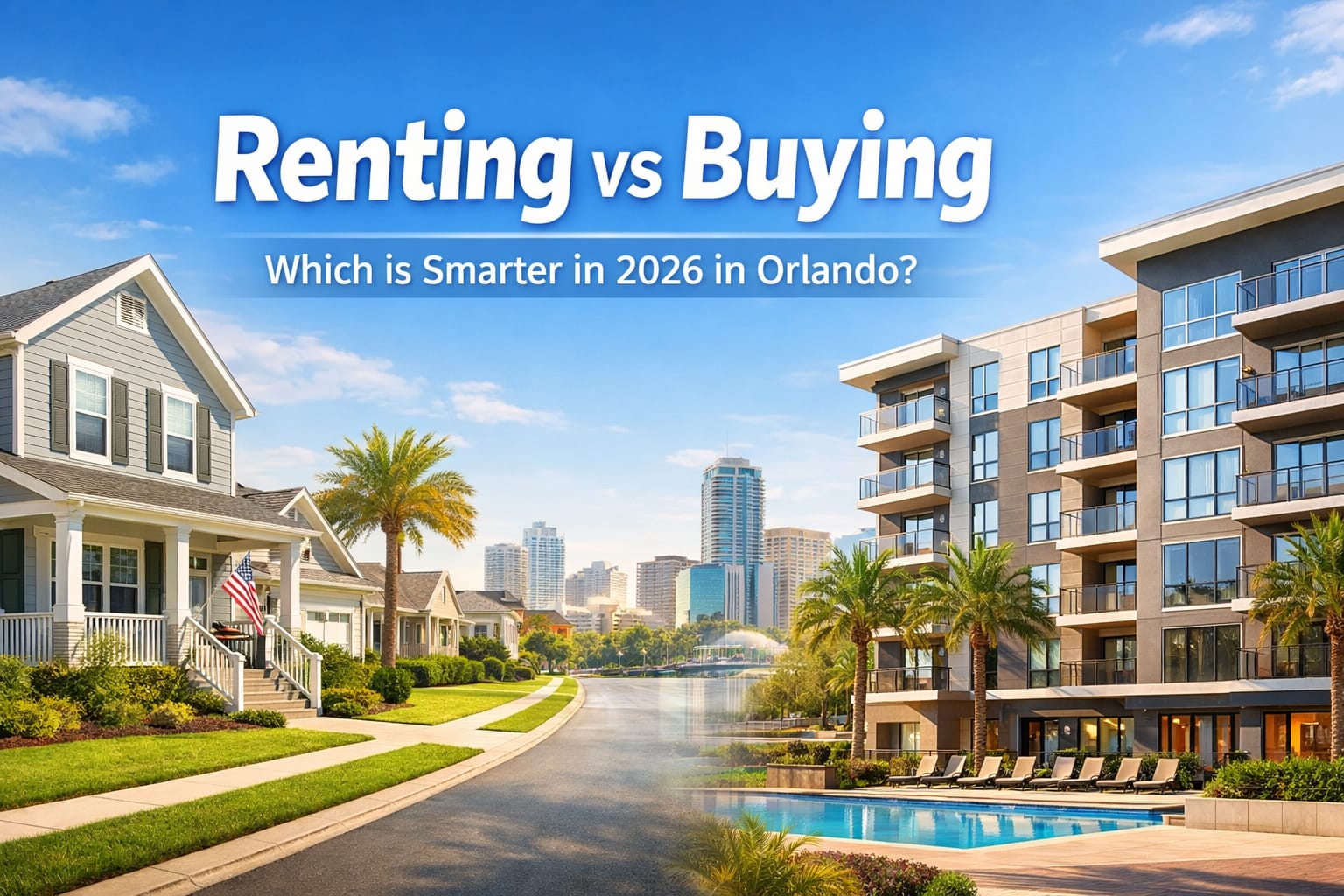
Renting vs Buying in Orlando: Which Is Smarter in 2026?

Renting vs Buying

If you’re renting in Orlando or Kissimmee and wondering whether buying a home finally makes sense, you’re not alone. Rising rents, changing interest rates, and shifting home prices have a lot of people rethinking their next move.

This guide breaks down the real numbers — not hype — so you can decide what’s smarter for you in 2026.

If you want a personalized rent-vs-buy breakdown, start here:

hogar


The Short Answer

Buying usually makes more sense if you plan to stay put for 3–5+ years and can qualify for a loan. Renting can still work short-term, but long-term costs often favor ownership in Central Florida.

Cost of Renting in Orlando

Orlando rents have increased significantly over the last few years.

  • Monthly rent payments that increase annually
  • No equity built over time
  • Limited control over rent increases or lease renewals

Renting offers flexibility, but you’re paying someone else’s mortgage.

Cost of Buying a Home

Buying comes with upfront costs, but those costs often stabilize over time.

  • Down payment (as low as 3–3.5% for many buyers)
  • Gastos de cierre
  • Monthly mortgage, taxes, and insurance

Not sure what upfront cash looks like? Start here: how much money you need to buy a house in Orlando

Monthly Payment Comparison

In many Orlando neighborhoods, monthly mortgage payments are now comparable to — or sometimes lower than — rent for similar homes.

Unlike rent, part of your mortgage payment builds equity.

Long-Term Wealth & Equity

When you buy a home:

  • You build equity with each payment
  • You benefit from appreciation over time
  • Your housing cost becomes more predictable

Renting provides convenience, but it doesn’t build long-term wealth.

Orlando Market Outlook for 2026

In 2026, Orlando continues to see strong demand driven by population growth, employment, and lifestyle appeal.

While price growth has moderated, long-term fundamentals remain strong — especially for buyers planning to stay several years.

When Buying Makes Sense

  • You plan to stay in Orlando or Kissimmee long term
  • You can qualify for a mortgage
  • You want payment stability
  • You want to build equity

If credit is your concern, start here: Cómo mejorar tu historial crediticio para comprar una casa

When Renting Makes Sense

  • You expect to move within 1–2 years
  • You’re working on credit or savings
  • You want maximum flexibility

Renting can be a smart short-term step — especially with a clear plan to buy.

If you’re at the beginning of the journey, see: pasos para comprar una casa por primera vez


Preguntas Frecuentes

Is renting cheaper than buying in Orlando?

Short term, sometimes. Long term, buying often wins when equity and appreciation are factored in.

Should I wait for prices or rates to drop?

Trying to time the market is risky. Many buyers do better focusing on affordability and long-term plans.

How do I know which option is right for me?

A personalized rent vs buy analysis makes the decision much clearer.

Want a real comparison based on your numbers? Let’s run it:

hogar

¡Mantengámonos en contacto!

Nuevo cliente potencial de formulario ORC

"*" indica los campos obligatorios

Este campo es para fines de validación y debe dejarse sin cambios.
Trastorno obsesivo-compulsivo*

Qué preguntas hacerle a un agente inmobiliario al vender

Thinking about selling your home? The questions you ask a realtor before listing can make the difference between selling quickly for top dollar — or sitting on the market and chasing price drops. The right agent should explain pricing, marketing, negotiations, and timing clearly, not dodge the tough questions.

Below is a practical, no-fluff guide to the most important questions to ask a realtor when selling, with specific insight into how this process works here in Orlando and Central Florida.

Why Asking the Right Questions Matters

Selling a home isn’t just about putting a sign in the yard. It’s about pricing strategy, market timing, buyer demand, negotiation skill, and knowing how to handle problems when they come up.

Many sellers choose an agent based on a recommendation or a quick meeting — and later realize the agent wasn’t prepared to protect their bottom line. Asking the right questions upfront helps you avoid that mistake.

Essential Questions to Ask a Realtor When Selling

1. How will you determine my home’s value?

A strong answer should include recent comparable sales, local market trends, and buyer behavior — not just an automated estimate. Ask how they handle pricing in shifting markets and whether they factor in condition, upgrades, and demand.

2. What’s your pricing strategy if the home doesn’t sell?

Pricing isn’t “set it and forget it.” A good realtor should explain when to adjust price, how long to wait, and what signals they watch from buyers and showings.

3. How will you market my home?

Marketing should include professional photography, online exposure, syndication through MLS.com, and targeted buyer outreach — not just uploading the listing and hoping for the best.

4. How do you handle negotiations?

Negotiation skill is where real money is won or lost. Ask how they handle multiple offers, inspection requests, appraisal gaps, and buyer concessions.

5. What happens if the appraisal comes in low?

This is where experience matters. A knowledgeable agent understands the appraisal process and can challenge or negotiate when values don’t align. Learn more about how the . process works.

6. How do you screen buyers?

Not every offer is equal. Your realtor should verify financing, timelines, and buyer strength before advising you to accept an offer.

7. What experience do you have with complex sales?

If you’re dealing with a short sale, foreclosure risk, or need to sell quickly, you want an agent who has handled these situations many times — not someone learning on your transaction.

8. How often will you communicate with me?

You should know how frequently you’ll receive updates and whether communication is proactive or reactive.

Quick Comparison: Strong Agent vs Weak Agent

Strong Realtor Weak Realtor
Explains pricing with real data Suggests a price without support
Has a clear marketing plan Relies only on MLS exposure
Experienced in negotiations Avoids difficult conversations
Understands Orlando market nuances Uses generic advice

Cómo Funciona la Venta de una Propiedad en Orlando, Florida

The Orlando market is unique. Neighborhood demand can change street by street. Investor activity, short-term rentals, and seasonal buyers all affect pricing and timing.

Experto Realtors en Orlando understands how local inventory, insurance costs, HOA rules, and buyer financing trends impact your sale.

Selling Fast vs Selling for Top Dollar

Some sellers want maximum price. Others need speed. If your goal is urgency — relocation, financial stress, or inherited property — your agent should clearly explain options to sell my house fast in Orlando without unrealistic promises.

Errores Comunes que Cometen los Vendedores al Evaluar Ofertas

  • Choosing the highest suggested price without data
  • Hiring an agent with no local experience
  • Ignoring early buyer feedback
  • Not understanding contract terms

Preguntas Frecuentes

¿Qué preguntas debo hacerle a un agente inmobiliario al vender una propiedad?

Ask about pricing strategy, marketing, negotiation experience, communication, and local market knowledge.

How many realtors should I interview?

At least two or three. Comparing answers helps reveal who is prepared and who isn’t.

¿Necesito un agente inmobiliario para vender mi casa?

While it’s possible to sell without one, most sellers benefit from pricing expertise, exposure, and negotiation skills.

How long does it take to sell a home in Orlando?

It depends on price, condition, and market demand, but strategy matters more than timing.

What if my home needs repairs?

An experienced agent can help you decide what to fix, what to leave, and how it affects price.

Can a realtor help with short sales?

Yes — but only if they have real short sale experience. This is not an entry-level skill.

What should I avoid when choosing a realtor?

Avoid vague answers, unrealistic pricing, and agents who avoid hard conversations.

How do I check a realtor’s reputation?

Read verified feedback and Check out my Google Reviews.

¿Por qué trabajar con Orlando Realty Consultants?

At Orlando Realty Consultants, I help sellers across Central Florida navigate traditional sales, fast sales, and complex short sale situations. I’ve worked with homeowners who needed speed, accuracy, and honest advice — not sales pressure.

If you’re thinking about selling and want clear answers, a realistic plan, and local expertise, let’s talk.

Llame Orlando Realty Consultants al 407-902-7750
Sirviendo al centro de Florida
Se habla Español

¡Mantengámonos en contacto!

Nuevo cliente potencial de formulario ORC

"*" indica los campos obligatorios

Este campo es para fines de validación y debe dejarse sin cambios.
Trastorno obsesivo-compulsivo*

Programa Compra Antes de Vender en Orlando y Kissimmee

How to Buy Your Next Home Before Selling Your Current One

If you own a home in Orlando or Kissimmee and you want to buy your next home before you sell, you’re not alone. The problem is simple: most homeowners need their current equity for the down payment, but most sellers don’t love contingency offers.

A Buy Before You Sell program is designed to fix that gap. It helps you unlock your equity and purchase your next home first, then sell your current home afterward—usually with a lot less pressure and a lot more control.

This guide breaks down how these programs work, who they’re best for, what they cost, and what to watch out for—specifically for buyers and sellers in Central Florida.


What Is a “Buy Before You Sell” Program?

A Buy Before You Sell program is a strategy (often supported by a lender or specialty company) that lets you:

  • Buy your next home first using your existing home equity (without waiting for your current home to sell)
  • Make a stronger offer (often with no home-sale contingency)
  • Sell your current home afterward on a timeline that’s usually calmer and more profitable

These programs come in a few forms—some look like a bridge loan, some look like a guaranteed purchase / backup offer, and some are equity-advance models. The label “Buy Before You Sell” is the umbrella term.

For a national overview of how these programs are commonly structured, see: HomeLight’s explanation of Buy Before You Sell programs.


Why Orlando & Kissimmee Homeowners Use This Strategy

In Central Florida, a lot of people are trying to move without disrupting work, school, or childcare—and they don’t want to gamble on timing two closings perfectly. A Buy Before You Sell approach is popular here because it can:

  • Reduce stress (no temporary housing, no moving twice)
  • Improve your buying power (stronger terms and cleaner offers)
  • Help you avoid rushed selling decisions that cost real money
  • Give you time to prep your old home (repairs, staging, cleaning) before listing

If you’re also working on the “buying side” basics, this page can help: What credit score do you need to buy a house in Orlando?


How a Buy Before You Sell Program Works (Step-by-Step)

  1. Equity and eligibility review
    You’ll confirm your current home value, your mortgage payoff, your equity position, your income, and your ability to qualify for the new purchase.
  2. Choose the right structure
    The solution might be a bridge loan, HELOC, equity-advance model, or a specialty “buy now, sell later” provider.
  3. Make an offer on the next home
    Often you can write a stronger offer—sometimes even without a home-sale contingency—because the program covers the gap.
  4. Close on the new home
    You move once, and you’re settled.
  5. Prep and sell the current home
    Now you can list your old home properly (not in panic mode), and you can time the sale for maximum impact.

Want to avoid buyer mistakes while you’re shopping? Read: Buying a home in Orlando: 5 red flags you shouldn’t ignore


Common “Buy Before You Sell” Options (What Most People Actually Use)

1) Bridge Loan

A bridge loan is short-term financing that helps you access equity while your current home is on the market. It’s often used to cover the down payment on your next home and sometimes even pays off the first mortgage temporarily.

  • Ventajas Fast access to equity, can make you a more competitive buyer
  • Contras Higher rates/fees, you may carry two payments for a period
  • Ideal para: Homeowners with strong income and solid equity

Learn how to evaluate loan options responsibly: CFPB mortgage resources

2) HELOC (Home Equity Line of Credit)

If you can qualify, a HELOC may allow you to pull equity for a down payment before you sell. This is often the “simplest” tool, but it depends heavily on credit, debt-to-income, and how quickly your lender can move.

  • Ventajas Often lower cost than specialty programs
  • Contras Approval can be strict; timelines aren’t always fast enough for hot listings
  • Ideal para: Buyers planning ahead (not last-minute)

3) “Buy Now, Sell Later” Specialty Programs

These are programs offered by certain companies that help you buy first and then sell. Some provide a guaranteed offer on your current home, some provide an equity advance, and some coordinate financing and listing support together.

  • Ventajas Convenient, can remove the contingency
  • Contras Fees can be meaningful; program rules can limit your flexibility
  • Ideal para: Buyers who value certainty and speed more than lowest-cost financing

What It Costs (The Part People Don’t Ask Soon Enough)

The biggest mistake I see is people focusing only on “Can I do it?” instead of “What will it cost me if I do it wrong?” Buy Before You Sell programs can absolutely be worth it—but the math needs to be honest.

Costs can include:

  • Program fees (flat fees or percentage-based)
  • Interest costs (bridge loans are typically higher than standard mortgages)
  • Carrying costs (two mortgages, insurance, utilities for a short window)
  • Transaction costs (normal closing costs on both sides still apply)
  • Potential pricing rules (some programs require certain listing strategies)

If you’re deciding whether to keep or sell a property (or turn it into a rental), you may also want: Is owning a short-term rental in Orlando still a good investment?


Who This Works Best For (And Who Should Be Careful)

This strategy is usually a great fit if:

  • You have meaningful equity in your current home
  • Your income supports the scenario where you may carry two payments briefly
  • You’re buying in a market where sellers prefer cleaner offers
  • You need a smoother move (kids, work schedule, relocation, etc.)

You should be cautious if:

  • Your equity is thin, or your payoff is close to your value
  • Your debt-to-income is tight and you won’t qualify while owning both homes
  • Your current home may take longer to sell due to location/condition/pricing
  • You’re relying on “best case” timing instead of planning for delays

Want to estimate value and taxes locally? These county resources help: Orange County Property Appraiser and Osceola County Property Appraiser.


Orlando & Kissimmee Tips to Make “Buy Before You Sell” Actually Work

  • Get your numbers first, not your emotions.
    You need a realistic sale price range, payoff, net sheet, and an estimated timeline before you fall in love with a new house.
  • Don’t overestimate your current home’s value.
    Online estimates are a starting point—not a pricing strategy. Pricing wrong can destroy your timeline.
  • Plan for overlap.
    Even if everything goes right, expect at least a short period of overlap. The question is how you’ll handle it, not whether it happens.
  • Prep the old house like it’s a product.
    Repairs, paint touch-ups, deep clean, landscaping, staging—this stuff moves the needle. Rushed listings leave money on the table.
  • Write offers like a pro.
    If your program allows a non-contingent offer, great—but terms still matter (inspection window, appraisal strategy, closing timeline).

FAQs: Buy Before You Sell Program (Orlando & Kissimmee)

1) Can I buy a house before I sell my current home in Florida?

Yes—if you qualify financially. Many homeowners use bridge loans, HELOCs, or specialty Buy Before You Sell programs to access equity and make the purchase first.

2) Do I have to make two mortgage payments at the same time?

Sometimes, yes—at least briefly. The whole point is to reduce pressure, but you still need a plan for overlap in case your current home takes longer to sell.

3) Will a Buy Before You Sell program help me make a stronger offer?

Often, yes. Removing (or reducing) a home-sale contingency typically makes your offer more attractive to sellers—especially in competitive areas.

4) What credit score do I need for a Buy Before You Sell program?

It depends on the lender/provider and your debt-to-income. Start here for local guidance: Credit score requirements for buying in Orlando .

5) Is a bridge loan the same thing as a Buy Before You Sell program?

A bridge loan is one common tool used to buy before selling, but “Buy Before You Sell” can also include HELOCs and specialty provider programs.

6) What are the biggest risks of buying before selling?

The main risks are carrying two homes longer than expected, overestimating your sale price, and paying higher fees/interest if the timeline stretches.

7) Should I sell first if my home needs repairs?

Not necessarily. In many cases, buying first allows you to move out, then repair and present your home better—which can lead to a higher sale price. But you still need to budget for the work and timeline.

8) How long do I have to sell my current home after buying?

Program rules vary. Some give you a set window; others are more flexible. Your best move is choosing a structure that matches your realistic selling timeline.

9) Is this strategy worth it in Orlando or Kissimmee?

It can be—especially if the program helps you win the right home and avoid moving twice. The key is running the numbers honestly (fees + overlap costs vs. convenience and stronger buying position).

10) What’s the first step if I want to do this?

Get a pricing and net sheet estimate for your current home, confirm your buying budget, and pick the best “buy first” structure for your situation. If you want help mapping this out, call 407-902-7750. Se Habla Español.


Next Step: Build a “Buy First” Plan That Actually Protects You

Buying before selling can be a smart move—but only when the financing, timeline, and pricing strategy are built correctly. If you want a clear plan for Orlando or Kissimmee (and you want someone to tell you the truth about the numbers), call 407-902-7750. Se Habla Español.

Helpful resources for buyers: National Association of REALTORS® | HUD home buying resources | IRS home sale capital gains basics

¡Mantengámonos en contacto!

Nuevo cliente potencial de formulario ORC

"*" indica los campos obligatorios

Este campo es para fines de validación y debe dejarse sin cambios.
Trastorno obsesivo-compulsivo*

¿Cuánto cuestan los gastos de cierre en Florida?

Closing costs in Florida typically range from 2% to 5% of the home’s purchase price. Orlando buyers usually pay 2%–3%, while sellers often pay 6%–8% when commissions are included. The exact amount depends on loan type, insurance, taxes, and negotiated terms.

What Are Closing Costs?

Closing costs are the fees and expenses required to complete a real estate transaction. In Florida, these costs cover everything from lender fees and title insurance to recording charges and prepaid taxes. Both buyers and sellers have closing costs, but they pay for different items.

Average Closing Costs in Florida

Transaction Type Typical Cost Range
Buyer Closing Costs 2% – 3% of purchase price
Seller Closing Costs (no commission) 1% – 2%
Seller Closing Costs (with commission) 6% – 8%

Florida Buyer Closing Costs Explained

  • Loan origination and underwriting fees
  • Appraisal and credit report
  • Home inspection (often paid earlier)
  • Title insurance (Florida is seller-customary, but negotiable)
  • Prepaid taxes and homeowners insurance
  • Recording fees and documentary stamps

Using a Closing cost calculator can help estimate totals, but local nuances in Orlando can shift numbers.

Florida Seller Closing Costs Explained

  • Real estate agent commissions
  • Title insurance (customary seller cost in Florida)
  • Doc stamps on the deed
  • HOA estoppel fees (if applicable)
  • Prorated taxes

Who Pays What in Florida?

Florida follows local customs, not laws, when it comes to who pays what. That means everything is negotiable. A strong local Realtor can often shift thousands of dollars in closing costs through smart contract structuring.

How Closing Costs Work in Orlando

In Orlando and Central Florida, buyers often focus on keeping cash-to-close manageable, especially first-time buyers. Sellers frequently agree to concessions to keep deals moving in competitive or shifting markets.

Local factors like insurance premiums regulated by the Florida Office of Insurance Regulation, HOA rules, and lender overlays can materially affect your final numbers.

How to Reduce Closing Costs in Florida

  • Negotiate seller concessions
  • Compare lenders carefully
  • Ask about lender credits
  • Choose title companies strategically
  • Review the Closing Disclosure line by line

Common Closing Cost Mistakes

  • Not budgeting beyond the down payment
  • Assuming online estimates are exact
  • Ignoring insurance and tax escrows
  • Waiting too late to ask questions

Are Closing Costs Different for MLS Homes?

No. Homes listed on the MLS follow the same closing cost structure as off-market or new construction properties, although builders sometimes offer incentives.

Special Situations That Affect Closing Costs

Helpful Resources for Buyers

For national guidance, review the Realtor.com – Buying Guide. Pairing that information with local Orlando expertise is where buyers win.

Preguntas Frecuentes

How much are closing costs in Florida for buyers?

Most Florida buyers pay between 2% and 3% of the purchase price.

How much are closing costs in Orlando specifically?

Orlando closing costs generally fall within state averages, though insurance and HOA fees can raise totals.

Do sellers pay closing costs in Florida?

Yes. Sellers pay title insurance, doc stamps, and typically agent commissions.

Are closing costs negotiable in Florida?

Absolutely. Nearly every line item is negotiable with the right strategy.

Can sellers pay buyer closing costs?

Yes. Seller concessions are common and often built into offers.

Do first-time buyers pay more?

No, but they often underestimate prepaid items like insurance and taxes.

When are closing costs due?

At closing, though inspections and appraisals are paid earlier.

Are closing costs higher with FHA loans?

They can be slightly higher due to mortgage insurance and funding fees.

Can closing costs be rolled into the loan?

Sometimes, depending on loan type and appraised value.

Work With a Local Orlando Expert

Closing costs aren’t just numbers—they’re leverage. At Orlando Realty Consultants, we help buyers and sellers throughout Central Florida understand exactly what they’re paying and how to reduce it.

Llame al 407-902-7750 to get a personalized closing cost breakdown before you make an offer.

¡Mantengámonos en contacto!

Nuevo cliente potencial de formulario ORC

"*" indica los campos obligatorios

Este campo es para fines de validación y debe dejarse sin cambios.
Trastorno obsesivo-compulsivo*

¿Qué tan cara puede ser la casa que puedo permitirme en Orlando, Florida?

La mayoría de los compradores pueden adquirir una vivienda cuyo precio equivale aproximadamente a entre 3 y 5 veces sus ingresos familiares anuales, dependiendo de sus deudas, pronto pago, tasas de interés, impuestos y seguros. En Orlando, los precios de las propiedades, las cuotas de las asociaciones de propietarios (HOA) y los costos de los seguros influyen significativamente en cuánto realmente puedes pagar.

¿Qué significa realmente “Cuánto puedo pagar por una casa”?

Esta pregunta no se trata solamente del precio de la propiedad, sino de cuánto puedes pagar cómodamente cada mes. Los bancos y las instituciones hipotecarias utilizan fórmulas para aprobar préstamos, pero los compradores inteligentes se enfocan en un pago mensual que puedan mantener a largo plazo sin comprometer sus finanzas. monthly comfort level. Lenders approve loans based on formulas, but smart buyers focus on affordability they can live with long term.

En Orlando, tu capacidad de compra depende de varios factores:

  • Los precios de las viviendas según el vecindario.
  • Los impuestos sobre la propiedad y los seguros, especialmente la cobertura contra huracanes y vientos fuertes.
  • Las cuotas de las asociaciones de propietarios (HOA) y condominios.
  • Las tasas de interés hipotecarias al momento de comprar.

Los factores principales que determinan cuánto puedes pagar

1. Tus ingresos mensuales brutos

Por lo general, los prestamistas consideran que los gastos de vivienda pueden representar aproximadamente entre el 28 % y el 31 % de tus ingresos mensuales brutos. Estos gastos incluyen el principal del préstamo, los intereses, los impuestos sobre la propiedad, los seguros y las cuotas de HOA.

2. Tu relación entre deudas e ingresos (DTI)

Muchos prestamistas establecen un límite aproximado de entre el 43 % y el 45 % para tus deudas mensuales totales, incluyendo el pago de la vivienda y otras obligaciones financieras. Entre estas se encuentran:

  • Pagos de vehículos.
  • Préstamos estudiantiles.
  • Tarjetas de crédito.
  • Préstamos personales.

3. Cantidad del pronto pago

Mientras mayor sea tu pronto pago, menor será la cantidad que necesitarás financiar y, generalmente, menor será tu pago hipotecario mensual. En Florida Central, muchos compradores utilizan las siguientes opciones:

  • Préstamos convencionales: Desde un 3 % hasta un 5 % de pronto pago, según el programa y los requisitos.
  • Préstamos FHA: Desde un 3.5 % de pronto pago para compradores que cualifiquen.
  • Préstamos VA o USDA: Posibilidad de comprar sin pronto pago para quienes cumplan con los requisitos.

4. Tasa de interés hipotecaria

Incluso una diferencia de un 1 % en la tasa de interés puede cambiar tu capacidad de compra por decenas de miles de dólares. Por eso, es importante comparar opciones hipotecarias y conocer las tasas disponibles antes de comenzar a buscar una propiedad.

Ejemplos de cuánto puedes pagar por una casa en Orlando

Ingresos familiares anuales Precio máximo estimado de la vivienda Rango de precio más cómodo
$75,000 $275,000–$310,000 $250,000–$290,000
$100,000 $350,000–$425,000 $325,000–$400,000
$150,000 $525,000–$650,000 $500,000–$600,000

Estas cantidades son estimados ilustrativos, no aprobaciones hipotecarias. Los impuestos, seguros, cuotas de HOA, tasas de interés y deudas personales pueden cambiar considerablemente tu capacidad de compra.

Pasos para determinar tu verdadero poder de compra

  1. Calcula tus ingresos mensuales brutos.
  2. Suma todas tus deudas y obligaciones mensuales.
  3. Estima los impuestos sobre la propiedad, seguros y cuotas de HOA.
  4. Obtén una preaprobación hipotecaria, no solamente una precualificación.
  5. Evalúa tu presupuesto para asegurarte de que el pago mensual sea cómodo y sostenible.

Las calculadoras en línea pueden ayudarte a comenzar, pero también es importante comparar los resultados con información real del mercado. Puedes consultar la Guía para comprar una vivienda de Realtor.com – Buying Guide y analizar los precios actuales de las propiedades en Orlando.

Ventajas y desventajas de comprar una casa al límite de tu presupuesto

Ventajas

  • Mayor variedad de propiedades disponibles.
  • Posibilidad de comprar en mejores ubicaciones o adquirir una construcción más reciente.
  • Potencial de apreciación a largo plazo

Contras

  • Menor flexibilidad en tu presupuesto mensual.
  • Mayor presión financiera si aumentan los gastos.
  • Más dificultad para cubrir reparaciones inesperadas o cambios en tu estilo de vida.

Errores comunes que cometen los compradores en Orlando

  • No considerar las cuotas de HOA al comprar condominios o townhouses.
  • Subestimar el costo de los seguros de vivienda en Florida.
  • Comprar una propiedad utilizando el máximo préstamo aprobado, en lugar de establecer un presupuesto cómodo.
  • No reservar dinero para mantenimiento y reparaciones.

Cómo funciona la capacidad de compra de vivienda específicamente en Orlando

El mercado inmobiliario de Orlando varía considerablemente según el vecindario y el tipo de propiedad. Tu capacidad de compra puede cambiar significativamente dependiendo de dónde decidas vivir. Por ejemplo:

For example:

  • Condominios en Downtown Orlando: Pueden tener precios de compra más bajos, pero cuotas de HOA elevadas.
  • Casas en áreas suburbanas: Pueden costar más inicialmente, pero algunas ofrecen gastos mensuales de mantenimiento y asociación más bajos.
  • Opciones alternativas: Algunos compradores consideran las casas con opción a compra en Orlando como una alternativa mientras se preparan para obtener una hipoteca tradicional.

Las regulaciones y los servicios del Gobierno de la Ciudad de Orlando también pueden influir en el uso de las propiedades y otros aspectos relacionados con la vivienda.

Además, los datos de Investigación de Zillow – Tendencias del mercado y la información de propiedades disponibles mediante el sistema MLS ayudan a determinar qué opciones de vivienda son realistas según las condiciones actuales del mercado.

Preguntas Frecuentes: ¿Cuánto Puedo Pagar por una Casa?

¿Qué tan cara puede ser una casa que pueda pagar según mis ingresos?

La mayoría de los compradores pueden considerar propiedades cuyo precio equivale a entre 3 y 5 veces sus ingresos anuales, dependiendo de sus deudas, pronto pago y situación financiera.

¿Puedo permitirme comprar una casa en Orlando con $100,000 al año?

Sí. Muchos compradores con ingresos anuales de $100,000 pueden cualificar para propiedades entre $350,000 y $425,000, dependiendo de sus deudas, gastos mensuales, crédito y pronto pago

¿Debería comprar por el monto máximo de mi préstamo aprobado?

No necesariamente. Que un banco te apruebe cierta cantidad no significa que debas gastar hasta ese límite. Lo importante es que el pago mensual te permita vivir cómodamente y mantener tus finanzas bajo control.

¿Cuánto dinero debo ahorrar antes de comprar una casa?

Lo recomendable es tener suficiente dinero para el pronto pago, los gastos de cierre y un fondo de emergencia equivalente a por lo menos 3 a 6 meses de gastos.

¿Las cuotas de la asociación de propietarios (HOA) afectan cuánto puedo pagar?

Definitivamente. Las cuotas de la asociación de propietarios (HOA) forman parte de tus gastos mensuales de vivienda y pueden reducir la cantidad que el banco te apruebe para comprar.

¿Es más económico alquilar o comprar una casa en Orlando?

Depende de la comunidad, los precios de las propiedades y cuánto tiempo piensas vivir allí. Aunque alquilar puede resultar más económico a corto plazo, comprar una propiedad puede ofrecer mayores beneficios financieros a largo plazo, incluyendo la acumulación de patrimonio.

¿Las deudas de préstamos estudiantiles afectan cuánto puedo pagar por una casa?

Sí. Los pagos de préstamos estudiantiles aumentan tu relación entre deudas e ingresos (DTI), lo que puede reducir tu capacidad de compra y la cantidad que un prestamista esté dispuesto a aprobarte.

¿Puedo comprar una casa si tengo un crédito bajo?

Sí, es posible. Existen programas hipotecarios para compradores con diferentes niveles de crédito. Sin embargo, tu puntuación crediticia puede afectar la tasa de interés, los requisitos del préstamo y las opciones de financiamiento disponibles.

¿Qué es más importante: el precio de la casa o el pago mensual?

El pago mensual es fundamental porque afecta directamente tu presupuesto y calidad de vida. Más allá del precio de compra, debes considerar la hipoteca, los impuestos, los seguros y las cuotas de HOA, si aplican.

Próximos Pasos: Conoce Tus Números Reales, Sin Adivinar

Si quieres saber cuánto puedes pagar realmente por una casa, necesitas información clara y orientación profesional, no simplemente que alguien trate de venderte una propiedad.

Habla con Orlando Realty Consultants Antes de Tomar una Decisión

Orlando Realty Consultants
Sirviendo al centro de Florida
📞 407-902-7750

We’ll break down your numbers, explain your options, and help you buy with confidence—without pushing you past your comfort zone.

¡Mantengámonos en contacto!

Nuevo cliente potencial de formulario ORC

"*" indica los campos obligatorios

Este campo es para fines de validación y debe dejarse sin cambios.
Trastorno obsesivo-compulsivo*