

Do I Qualify for a Short Sale in Orlando, Florida?
If you’re asking, “do I qualify for a short sale?” you’re usually dealing with one of two pressures: you can’t realistically keep the home long-term, and selling the traditional way won’t cleanly pay off what you owe. In Central Florida, I see this most often after job changes, divorce, medical bills, insurance spikes, HOA issues, or an escrow payment that jumped in a way that made the mortgage unmanageable.
Quick Answer (Featured Snippet)
Most homeowners qualify for a short sale if (1) they can show a real financial hardship and (2) the home will not net enough to fully pay off the mortgage(s) after normal selling costs. You don’t always have to be months behind, but lenders typically want proof you’re at risk of default and that a short sale costs them less than foreclosure.
What “Qualifying for a Short Sale” Actually Means
A short sale is when your lender agrees to accept less than the full amount owed on your mortgage when you sell the home. The lender must approve the sale because they’re agreeing to a reduced payoff. In plain English: you’re asking the bank to take a loss so you can sell and move on without foreclosure taking control of the timeline.
Short sales are still very relevant in Orlando and throughout Central Florida in 2026. Even with a strong buyer pool, homeowners can get squeezed by rising insurance premiums, property taxes, HOA fees, maintenance costs, adjustable-rate changes, or a tenant situation that stopped cash flowing on an investment property.
The 2 Core Requirements to Qualify for a Short Sale
1) A Documented Financial Hardship
Lenders want a clear, believable reason you can’t maintain the mortgage long-term. “I just don’t like the payment” usually isn’t enough. “My income dropped, expenses rose, or life changed and I can’t keep up” is the type of story that fits lender guidelines—especially when it’s supported by documents.
- Job loss, reduced hours, or income reduction
- Divorce or separation (two households cost more than one)
- Medical bills or ongoing care costs
- Death of a spouse or primary earner
- Business failure or major revenue decline
- Relocation or transfer (especially with an underwater home)
- Payment shock from escrow shortages, taxes, or insurance increases
- Tenants stopped paying / rental no longer cash flows
- Major unavoidable repairs you cannot afford (roof, plumbing, foundation)
2) The Numbers Don’t Work for a Traditional Sale
Most short sales happen because the home is underwater (negative equity), or because once you add closing costs, commissions, and liens, there isn’t enough net to satisfy the mortgage payoff(s). This is where many homeowners get surprised—because “Zillow says I have equity” isn’t the same as “I can actually sell and pay everything off.”
To determine this, we look at:
- Estimated market value (based on real Orlando-area comparable sales, not guesses)
- Expected net proceeds after typical selling costs
- Mortgage payoff(s), second mortgages, HELOCs, and other liens
- HOA/condo balances, code enforcement issues, or judgments (if any)
Do You Have to Be Behind on Payments to Qualify?
Not always. But here’s the honest truth: many lenders prefer to see delinquency or imminent default, because it helps them justify approving a loss. Some lenders will consider a short sale while you’re still current if your hardship is strong and your financials show you cannot keep it up.
If you’re current only because you’re draining savings, using credit cards, or borrowing from family, that can still be part of a valid hardship story—when it’s documented correctly and presented the right way.
A Practical Orlando Short Sale Qualification Checklist
Use this quick checklist to self-screen. If you hit several of these, it’s worth getting a professional review before the situation gets worse.
| Question | If “Yes,” What It Means |
|---|---|
| Is your mortgage payment no longer sustainable long-term? | You may have a hardship case (especially with proof). |
| Do you owe more than the home could realistically sell for today? | Negative equity supports short sale eligibility. |
| Would you have to bring money to closing to sell traditionally? | A short sale may be the realistic exit strategy. |
| Are you behind, about to fall behind, or receiving default/foreclosure notices? | Lenders often prioritize files with clear foreclosure risk. |
| Do you have a second mortgage, HELOC, HOA lien, or other lien? | Still possible—just more negotiation and more paperwork. |
| Have you already tried to keep the home (modification/forbearance) and it didn’t solve the problem? | This can strengthen the lender’s “short sale vs foreclosure” decision. |
What Lenders Usually Ask For (Your Short Sale Package)
Every lender has its own checklist, but most short sale approvals hinge on the quality and completeness of your package. Missing documents and sloppy submissions are a common reason files stall out.
- Hardship letter (clear, factual, and consistent with your documents)
- Pay stubs or proof of income (or unemployment/benefits documentation)
- Two years of tax returns (sometimes required, sometimes not)
- Recent bank statements (all pages)
- Monthly budget/financial worksheet
- Authorization to release information (so we can speak to the lender)
- Comparative Market Analysis / valuation support
- Signed offer from a qualified buyer (when you get one)
Credentials matter in short sales. If you’re working with someone who doesn’t do these regularly, delays are common. If you’re curious what the industry credential means, here’s what CDPE stands for and why it’s relevant in distressed sales.
Special Situations That Can Affect Qualification
If You Have a Second Mortgage or “HELOC”
Short sales can still be approved with second mortgages and lines of credit, but they add an extra negotiation layer because multiple lienholders must agree to the payoff structure. If you have a HELOC, we plan for that upfront so it doesn’t blow up late in the process.
If You’re Behind on HOA/Condo Fees
In many Orlando-area communities (condos and deed-restricted neighborhoods especially), HOA balances and collections can become a real obstacle. We identify HOA/condo payoff needs early and coordinate how those liens will be handled at closing.
If the Home Needs Repairs
Many short sales are sold “as-is.” Lenders understand that homeowners in hardship often can’t fund repairs. The key is pricing and positioning the property correctly and documenting condition issues so the value is supportable.
If You’re Inherited a Property With Debt
Inherited homes can qualify for a short sale if there’s mortgage debt and the estate (or heirs) can’t realistically carry the cost. These cases require careful handling of documentation, authority to sell, and timelines.
Step-by-Step: How the Short Sale Process Works
- Confidential review: we look at your mortgage(s), estimated value, hardship, and timing.
- Pre-list planning: identify liens, HOA issues, occupancy, and a realistic pricing strategy.
- List the home: market it properly as a short sale with lender approval required.
- Get an offer: ideally from a strong, qualified buyer (this matters).
- Submit the package: offer + full lender short sale package to loss mitigation.
- Lender review: valuation (BPO/appraisal), negotiations, lienholder approvals.
- Approval letter issued: sets price, terms, deadlines, and closing requirements.
- Close: title work, payoffs, transfer, and lender lien release.
How Long Does a Short Sale Take in Orlando (2026 Timeline)?
Most Central Florida short sales land in the 90 to 180 day range from listing to closing. Some move faster, some take longer—especially with multiple liens or slow lender response times.
- 1–2 weeks: initial review + listing prep
- 2–8 weeks: marketing + buyer offer
- 6–14+ weeks: lender review, valuation, negotiation
- 2–4 weeks: final closing coordination after approval
Pros and Cons of a Short Sale
Pros
- Often less credit damage than foreclosure (and less long-term fallout)
- More control and dignity than a forced foreclosure timeline
- Can reduce the risk of escalating legal costs and stress
- Potentially faster path to financial recovery than foreclosure
Cons
- Lender approval is required (not guaranteed)
- Paperwork-heavy and time-consuming
- Possible deficiency exposure depending on lender terms and your situation
- May impact your ability to buy again right away
Common Mistakes That Get Short Sales Denied (or Delayed)
- Waiting too long: once foreclosure is far advanced, your options shrink fast.
- Incomplete financial package: missing pages, outdated statements, or inconsistencies.
- Unrealistic pricing: the lender will order a valuation; inflated pricing wastes time.
- Weak buyer: shaky financing or poor terms often triggers delays or rejection.
- Ignoring second liens/HOA liens: surprises late in the game can kill the deal.
- Taking advice from the wrong people: short sales are a specialty, not a side hustle.
How It Works in Orlando and Central Florida (Local Reality)
Orlando-area short sales aren’t one-size-fits-all. Here are a few patterns I see across Orange, Osceola, Seminole, and surrounding counties:
- Escrow shock is real: homeowners who were “fine” two years ago can get crushed by insurance and tax increases that spike the monthly payment.
- HOA/condo dynamics matter: condos and gated communities often have stricter rules and quicker collections timelines.
- Investor properties can flip fast: rental markets change; if a property stopped cash flowing, lenders still want a clean hardship story and real numbers.
- Buyer patience varies by neighborhood: some areas move quickly; some buyers won’t wait through lender approval unless the deal is structured well.
If you want to verify you’re working with a properly organized professional community locally, you can also reference Realtors as a local industry resource.
Is a Short Sale the Best Option, or Are There Better Alternatives?
Sometimes a short sale is the right move. Sometimes it isn’t. Before you commit, it’s smart to compare it against:
- Loan modification
- Forbearance or repayment plans
- Traditional sale (if you truly have net equity)
- Deed-in-lieu of foreclosure (in limited cases)
- Bankruptcy consultation (for broader debt issues)
A good plan starts with a real numbers review—value, payoffs, liens, and timeline—then choosing the option that causes the least long-term damage.
FAQs: “Do I Qualify for a Short Sale?” (Orlando Homeowners)
1) Do I qualify for a short sale if I’m not behind on payments?
Possibly. Some lenders will consider it if your hardship is legitimate and your financials show you can’t sustain the payment. Many still prefer delinquency or imminent default.
2) Do I qualify if my home is underwater but I’m still employed?
Being underwater helps, but it’s usually not enough by itself. Lenders want both negative equity and a hardship that explains why keeping the home isn’t realistic.
3) How far behind do you have to be to qualify in Florida?
There’s no single rule across all lenders. Some want 30–90+ days delinquent; others will review earlier if the hardship is strong and well-documented.
4) Do I qualify for a short sale with a second mortgage?
Yes, many homeowners do. It’s more complex because multiple lienholders must agree, but it’s absolutely possible with proper negotiation.
5) Can a short sale stop foreclosure in Orlando?
It can slow the process and sometimes replace it, but it doesn’t automatically “stop” foreclosure without coordination. Timing and lender communication matter.
6) What documents do I need to prove hardship?
Typically income proof, bank statements, a budget worksheet, and a hardship letter. Your lender may ask for tax returns and other supporting documents depending on the situation.
7) Will I owe money after the short sale closes?
Sometimes lenders waive the remaining balance; sometimes they don’t. Approval terms vary. This is why the lender approval letter (and professional guidance) is critical.
8) Will a short sale ruin my credit?
It can hurt your credit, but it’s often less severe than foreclosure. Your exact impact depends on your loan status, payment history, and how the lender reports it.
9) How long does a short sale take in Central Florida?
Many run 3–6 months end-to-end, but multiple liens, HOA issues, or slow lender response can extend timelines.
10) What’s the first step if I think I qualify?
Get a confidential review of your value vs payoff and your hardship story. The earlier you act, the more options you typically have.
Bottom Line: If You’re Asking “Do I Qualify for a Short Sale?” Don’t Guess
Short sales are approval-driven, document-heavy, and timing-sensitive. The best move is to get clarity early—before default notices pile up and choices narrow.
Talk With Orlando Realty Consultants (No Pressure, Just Clarity)
If you’re a Central Florida homeowner trying to avoid foreclosure and you want an honest answer on whether a short sale fits, reach out. We’ll review your situation, explain what lenders typically require, and map the cleanest next step.
- Business Name: Orlando Realty Consultants
- Phone: 407-902-7750
- Service Area: Central Florida
Start here if you want a short-sale focused consultation: Orlando short sale Realtor
Or explore our dedicated short sale resource page: Orlando short sale expert
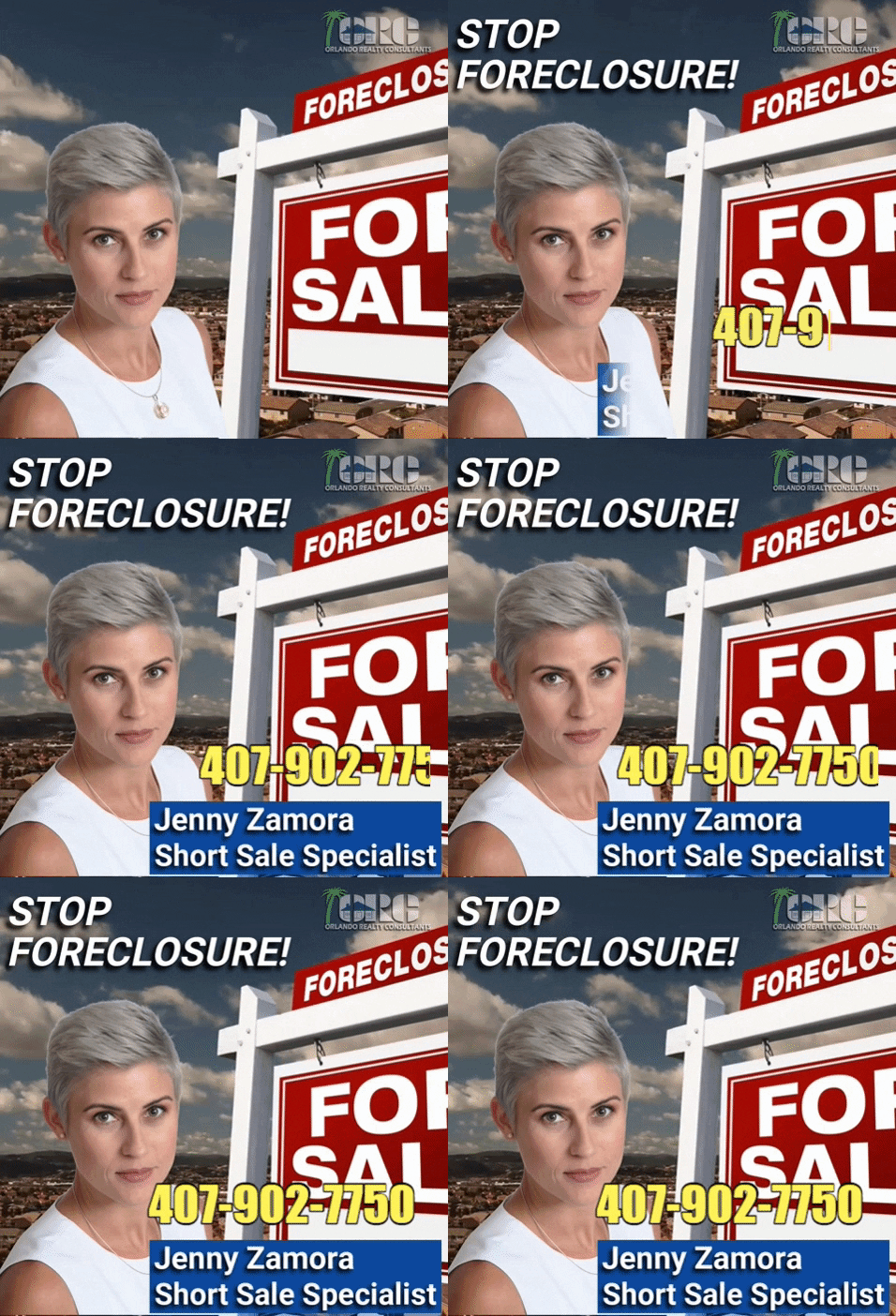

Jenny Zamora is a trusted Orlando Realtor with Orlando Realty Consultants, known for helping buyers, sellers, and investors navigate the Central Florida market with clarity and confidence. Jenny takes a relationship-first approach—listening closely, educating her clients, and guiding each step with honest advice and strong negotiation. Whether you’re buying your first home, relocating, selling to upgrade, or exploring investment opportunities, Jenny is committed to making the process smooth, strategic, and stress-free.
To learn more about Jenny’s professional membership and credentials, visit her REALTOR® member profile here.
