
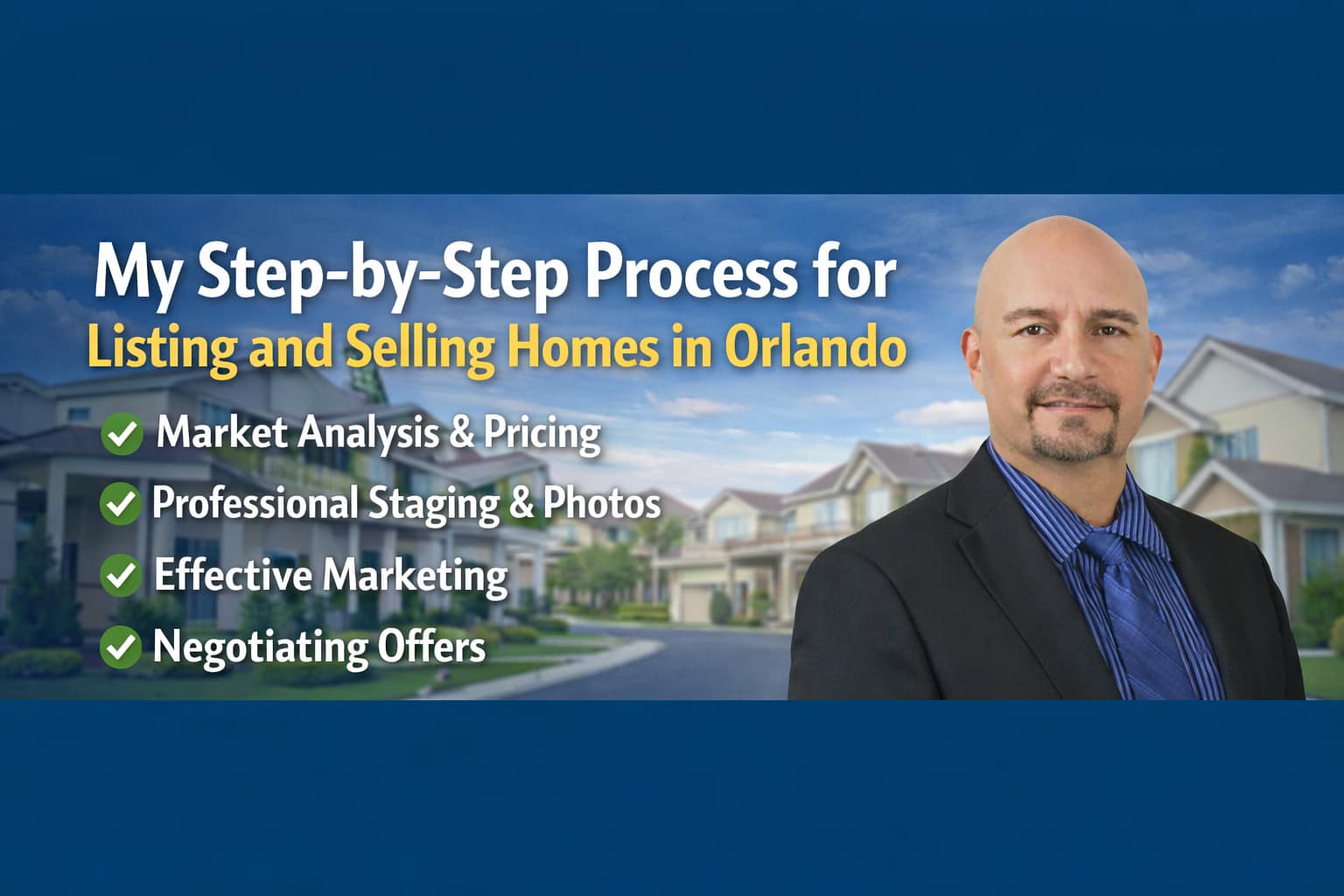
Listing a Home Step by Step: The Complete Orlando Seller’s Guide
Quick Answer: Listing a home step by step means preparing the property, pricing it correctly, signing a listing agreement, marketing through the MLS, negotiating offers, and closing the sale. Following a structured process helps sellers attract qualified buyers, protect their equity, and reduce delays.
Selling a home isn’t just putting a sign in the yard. A well-executed listing strategy involves pricing, preparation, marketing exposure, negotiations, and a managed closing timeline. At Orlando listing agent Orlando Realty Consultants, every step is handled with a clear plan designed to maximize your net proceeds and minimize surprises.
What “Listing a Home Step by Step” Really Means
When homeowners search for how to list a property, they’re usually trying to understand the sequence—from deciding to sell all the way to transferring ownership. A structured listing process matters because preparation, marketing, and pricing decisions directly impact how quickly your property sells and for how much.
Most successful sales follow the same fundamentals: preparation, exposure, negotiation, and closing. For example, strong visuals and staging improve buyer interest, while wide marketing distribution increases showing requests. Buyers today typically begin online, so presentation and visibility are critical.
Step-by-Step: The Complete Home Listing Process
1. Initial Consultation and Market Evaluation
The first step is a strategy session. We review your goals, timeline, property condition, and neighborhood trends. A comparative market analysis determines a realistic price range based on recent comparable sales.
Working with a Realtor in Orlando ensures access to local data, pricing insight, and buyer demand patterns specific to Central Florida.
2. Establish a Pricing Strategy
Pricing too high can stall momentum, while pricing correctly can generate competing offers. A data-driven strategy considers:
- Recent comparable sales
- Current active inventory
- Condition and upgrades
- Buyer demand trends
The listing price sets the tone for your entire marketing campaign.
3. Prepare the Property for the Market
Before showings begin, the property must present well. Decluttering, depersonalizing, and addressing minor repairs helps buyers envision themselves living there. Small cosmetic updates and strong curb appeal often create the biggest return.
4. Staging and Professional Photography
Online presentation is often the first showing. Professional photography and thoughtful staging make listings stand out and drive more engagement from buyers browsing online listings.
5. Sign the Listing Agreement
This formalizes representation, sets expectations, and outlines the marketing plan. It also establishes listing terms, commission structure, and timeline.
6. Launch Marketing and List on the MLS
Exposure matters. Most buyer agents search properties through the MLS, which then syndicates listings across major real estate websites, increasing visibility and attracting qualified buyers.
7. Showings, Open Houses, and Buyer Feedback
Once active, showings begin. Feedback from agents and buyers helps refine strategy, staging, or pricing if needed.
8. Review and Negotiate Offers
Offers are evaluated based on price, financing strength, contingencies, and closing timeline. Strong negotiation protects your net proceeds and reduces risk.
9. Inspections, Appraisal, and Contract Management
After acceptance, inspections and lender requirements must be navigated carefully. The appraisal verifies value for the buyer’s lender, and any repair negotiations are handled strategically.
10. Closing and Transfer of Ownership
Closing is the final step where funds transfer and the deed is recorded. Once documents are signed and confirmed, ownership officially changes hands.
Listing Timeline Overview
| Phase | Typical Timeframe | Key Activities |
|---|---|---|
| Preparation | 1–3 weeks | Repairs, staging, pricing, photography |
| Active Marketing | 2–6 weeks | Showings, open houses, feedback |
| Under Contract | 30–45 days | Inspections, appraisal, financing |
| Closing | 1 day | Final signing and ownership transfer |
Key Concepts Sellers Should Understand
- Accurate pricing drives buyer traffic.
- Professional presentation increases perceived value.
- Wide exposure generates stronger competition.
- Contract management prevents costly delays.
- Communication with buyers and agents keeps the deal moving.
The National Association of Realtors emphasizes that successful transactions rely on organized preparation, documentation, and consistent follow-up throughout the listing and closing phases.
Pros and Cons of Listing Your Home
Pros
- Potential to maximize sales price through exposure and competition
- Professional negotiation support
- Access to qualified buyers
Cons
- Preparation costs (repairs, staging, photography)
- Showings and scheduling inconvenience
- Market conditions may impact timing
Common Mistakes Sellers Make
- Overpricing based on emotion instead of market data
- Skipping preparation or staging
- Ignoring early buyer feedback
- Choosing the wrong marketing strategy
- Accepting weak offers without full analysis
How the Process Works Specifically in Orlando
Central Florida’s market moves quickly when priced correctly, but competition between listings is real. Local buyers often prioritize condition, location near employment centers, and proximity to major attractions.
Seasonality matters as well. Spring tends to bring stronger buyer activity, while inventory levels fluctuate throughout the year. Timing your listing launch strategically—often mid-week—can increase weekend showing traffic.
Orlando also has a high volume of investment and relocation buyers. Listings that include strong marketing, clear disclosures, and accurate pricing typically see faster activity.
Experience Matters — Especially With Complex Situations
Not every sale is straightforward. With extensive experience handling distressed properties and negotiating lender approvals, Orlando Realty Consultants helps homeowners navigate short sales, equity challenges, and timeline pressures.
If you’re behind on payments or facing hardship, a structured listing strategy can often protect credit and reduce financial damage. Short sale transactions require detailed documentation, lender communication, and precise negotiation—areas where experience directly affects outcomes.
Actionable Seller Checklist
- Schedule a pricing consultation
- Complete recommended repairs
- Declutter and stage key rooms
- Gather HOA and property documents
- Approve marketing materials
- Prepare for showings
- Review offers carefully
- Stay responsive during escrow
Summary: Your Next Steps
Listing a home step by step isn’t complicated when the process is clear and professionally managed. Preparation, pricing, exposure, negotiation, and contract oversight all work together to produce the best outcome.
Work With Orlando Realty Consultants
Orlando Realty Consultants
Serving Central Florida
Phone: 407-902-7750
Our approach is simple—strategic pricing, aggressive marketing, constant communication, and experienced negotiation from listing to closing. Whether your property is turnkey or requires a more complex solution like a short sale, you’ll have a clear plan and a team focused on protecting your bottom line.
Frequently Asked Questions
How long does it take to list a home?
Preparation typically takes one to three weeks depending on repairs, staging, and photography scheduling.
What is the first step in listing a home step by step?
The first step is a pricing consultation and market analysis to determine the right listing strategy.
Do I need repairs before listing?
Addressing visible issues helps prevent buyer objections and improves perceived value.
Why is the MLS important?
The MLS exposes your property to thousands of agents and buyers, dramatically increasing visibility.
Should I stage my home?
Staging often helps homes sell faster and at stronger prices by improving presentation.
What happens after I accept an offer?
The transaction enters escrow, inspections and appraisal occur, and financing is finalized before closing.
Can I sell if I’m behind on payments?
Yes. Options like short sales may allow you to sell and avoid foreclosure if handled correctly.
How do I know the right listing price?
A comparative market analysis using recent sales and current inventory provides the most accurate pricing range.
Do I have to host open houses?
Not always. The strategy depends on your property type, location, and buyer demand.
What costs should I expect when selling?
Typical costs include commissions, closing fees, possible repairs, and staging or marketing expenses.


John Conde is a trusted Orlando Realtor with Orlando Realty Consultants, known for helping buyers, sellers, and investors navigate the Central Florida real estate market with clarity and confidence. John takes a relationship-first approach—listening closely, educating his clients, and guiding every step with honest advice and strong negotiation skills.
Whether you’re buying your first home, relocating to Orlando, selling to upgrade, or exploring investment opportunities, John is committed to making the process smooth, strategic, and stress-free.
To learn more about John’s professional memberships and credentials, visit his REALTOR® member profile here.
