How Much Are Closing Costs in Florida?

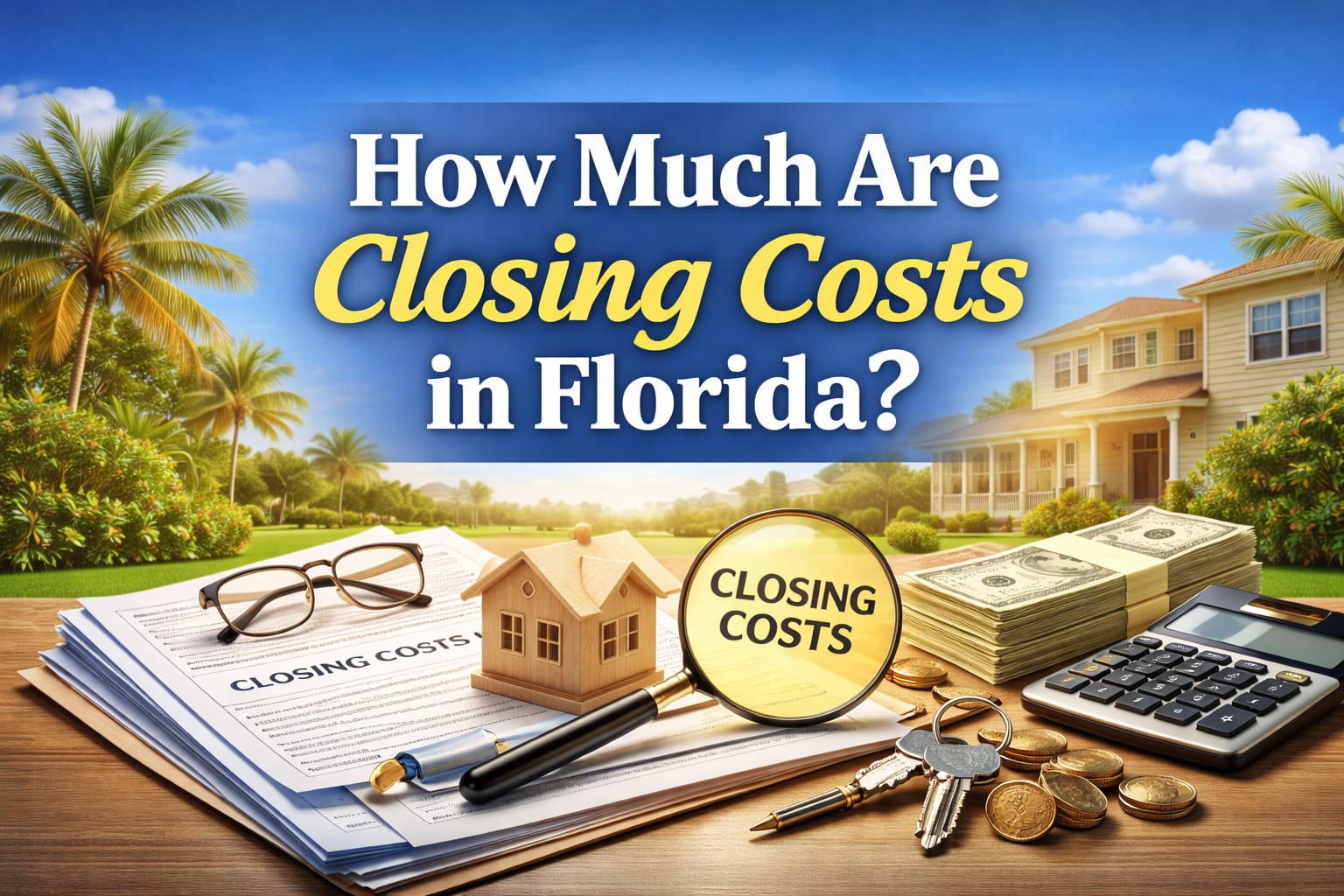
Closing costs in Florida typically range from 2% to 5% of the home’s purchase price. Orlando buyers usually pay 2%–3%, while sellers often pay 6%–8% when commissions are included. The exact amount depends on loan type, insurance, taxes, and negotiated terms.

What Are Closing Costs?

Closing costs are the fees and expenses required to complete a real estate transaction. In Florida, these costs cover everything from lender fees and title insurance to recording charges and prepaid taxes. Both buyers and sellers have closing costs, but they pay for different items.

Average Closing Costs in Florida

Transaction Type Typical Cost Range
Buyer Closing Costs 2% – 3% of purchase price
Seller Closing Costs (no commission) 1% – 2%
Seller Closing Costs (with commission) 6% – 8%

Florida Buyer Closing Costs Explained

  • Loan origination and underwriting fees
  • Appraisal and credit report
  • Home inspection (often paid earlier)
  • Title insurance (Florida is seller-customary, but negotiable)
  • Prepaid taxes and homeowners insurance
  • Recording fees and documentary stamps

Using a Closing cost calculator can help estimate totals, but local nuances in Orlando can shift numbers.

Florida Seller Closing Costs Explained

  • Real estate agent commissions
  • Title insurance (customary seller cost in Florida)
  • Doc stamps on the deed
  • HOA estoppel fees (if applicable)
  • Prorated taxes

Who Pays What in Florida?

Florida follows local customs, not laws, when it comes to who pays what. That means everything is negotiable. A strong local Realtor can often shift thousands of dollars in closing costs through smart contract structuring.

How Closing Costs Work in Orlando

In Orlando and Central Florida, buyers often focus on keeping cash-to-close manageable, especially first-time buyers. Sellers frequently agree to concessions to keep deals moving in competitive or shifting markets.

Local factors like insurance premiums regulated by the Florida Office of Insurance Regulation, HOA rules, and lender overlays can materially affect your final numbers.

How to Reduce Closing Costs in Florida

  • Negotiate seller concessions
  • Compare lenders carefully
  • Ask about lender credits
  • Choose title companies strategically
  • Review the Closing Disclosure line by line

Common Closing Cost Mistakes

  • Not budgeting beyond the down payment
  • Assuming online estimates are exact
  • Ignoring insurance and tax escrows
  • Waiting too late to ask questions

Are Closing Costs Different for MLS Homes?

No. Homes listed on the MLS follow the same closing cost structure as off-market or new construction properties, although builders sometimes offer incentives.

Special Situations That Affect Closing Costs

  • New construction homes
  • VA and FHA loans
  • Investor purchases
  • Rent-to-own scenarios like rent to own in Orlando

Helpful Resources for Buyers

For national guidance, review the Realtor.com – Buying Guide. Pairing that information with local Orlando expertise is where buyers win.

Frequently Asked Questions

How much are closing costs in Florida for buyers?

Most Florida buyers pay between 2% and 3% of the purchase price.

How much are closing costs in Orlando specifically?

Orlando closing costs generally fall within state averages, though insurance and HOA fees can raise totals.

Do sellers pay closing costs in Florida?

Yes. Sellers pay title insurance, doc stamps, and typically agent commissions.

Are closing costs negotiable in Florida?

Absolutely. Nearly every line item is negotiable with the right strategy.

Can sellers pay buyer closing costs?

Yes. Seller concessions are common and often built into offers.

Do first-time buyers pay more?

No, but they often underestimate prepaid items like insurance and taxes.

When are closing costs due?

At closing, though inspections and appraisals are paid earlier.

Are closing costs higher with FHA loans?

They can be slightly higher due to mortgage insurance and funding fees.

Can closing costs be rolled into the loan?

Sometimes, depending on loan type and appraised value.

Work With a Local Orlando Expert

Closing costs aren’t just numbers—they’re leverage. At Orlando Realty Consultants, we help buyers and sellers throughout Central Florida understand exactly what they’re paying and how to reduce it.

Call 407-902-7750 to get a personalized closing cost breakdown before you make an offer.

Let's Keep In Touch!

New ORC Form Lead

"*" indicates required fields

TOC*

Your Orlando Home Isn’t Selling? Here’s How I Fix That

What to Do When Your Home Isn’t Selling (Best Orlando Fixes)

If your home isn’t selling, start by re-evaluating your price, improving how it shows (staging & photos), and expanding how buyers see it online. Fixing condition and perception often unlocks offers — especially in competitive Orlando neighborhoods.

Why Your Home Isn’t Selling

Homes fail to sell for a few predictable reasons — and once you know which one is at play, you can fix it. The most common culprits are pricing too high, poor presentation, weak marketing, or market timing. Orlando’s market is competitive and buyers compare similar homes quickly, so even small missteps can stall a listing. :contentReference[oaicite:0]{index=0}

Top Reasons Homes Sit Stale

  • Overpricing: Buyers ignore properties priced above similar homes. :contentReference[oaicite:1]{index=1}
  • Unappealing photos or staging: Poor visuals turn buyers away online. :contentReference[oaicite:2]{index=2}
  • Lack of marketing reach: Listing only on the Multiple Listing Service (like https://www.mls.com/) isn’t enough in 2026. :contentReference[oaicite:3]{index=3}
  • Condition issues: Visible repairs or dated features can scare off offers. :contentReference[oaicite:4]{index=4}
  • Seasonality & timing: Timing matters — slow periods can stretch days on market. :contentReference[oaicite:5]{index=5}

Step-by-Step Plan for When Your Home Isn’t Selling

1. Re-evaluate Your Price

Price is the #1 reason a home doesn’t sell. Even if you think your home is worth more, buyers compare numbers first — and they don’t care about your upgrades or emotional value. Work with your agent to update the comparative market analysis and adjust the list price as needed. :contentReference[oaicite:6]{index=6}

2. Improve First Impressions (Curb Appeal)

In Orlando, curb appeal matters. Grassy lawns, trimmed shrubs, and a welcoming front entrance make buyers stop scrolling. Power wash walkways, paint the front door, and add simple landscaping. :contentReference[oaicite:7]{index=7}

3. Stage & Depersonalize

Buyers must imagine themselves living in your home. Declutter, remove personal photos, and stage key rooms for purpose (living, dining, master suite). If the current photos feel crowded or too unique to your taste, refresh them. :contentReference[oaicite:8]{index=8}

4. Expand Marketing Efforts

An active marketing plan goes beyond the MLS and a sign in the yard. Use targeted social media posts, video walkthroughs, and open houses to broaden visibility. Agents who rely on passive marketing often see listings go stale. :contentReference[oaicite:9]{index=9}

5. Fix Key Repairs & Updates

Today’s buyers are looking for move-in ready homes. Address squeaky doors, peeling paint, or outdated fixtures. If a full remodel isn’t feasible, consider offering renovation credits or repair allowances.

6. Be Flexible With Showings

Weeknight showings or last-minute tours can translate to more buyers seeing your home. Removing restrictions and letting agents schedule easily can speed up offers. :contentReference[oaicite:10]{index=10}

Orlando-Specific Market Realities

Orlando is unique — tourists, seasonal moves, and job growth all impact selling conditions. A Realtor in Orlando like those at https://www.orlandorealtors.org/ understands local buyer preferences, neighborhood price bands, and effective marketing strategies tailored to Central Florida. Price adjustments that might be conservative elsewhere can be crucial here.

When a Change of Strategy Makes Sense

If you’ve tried the steps above and your home still isn’t selling, consider:

  • New agent or fresh perspective
  • Temporary rental or lease option
  • Alternative selling routes

Common Seller Mistakes to Avoid

  • Ignoring buyer feedback from showings
  • Waiting too long to adjust price
  • Overpersonalizing décor
  • Neglecting professional photos

Summary: What to Do When Your Home Isn’t Selling

Start with pricing and first impressions. From there, improve how your home is marketed and make the property appeal to buyers quickly. In Orlando’s market, quick, strategic adjustments often beat waiting months for a buyer to finally show interest.

Ready for a Local Realtor Who Gets Results?

If your home isn’t selling — and you’re done waiting — call Orlando Realty Consultants at 407-902-7750. We know Orlando buyers, neighborhood pricing, and what it takes to get homes under contract, fast. Se habla español.

Let's Keep In Touch!

New ORC Form Lead

"*" indicates required fields

TOC*

What You Can Expect During the Home Selling Process

The Home Selling Process: What Orlando Sellers Should Expect

Quick Answer: The home selling process includes preparing your property, pricing it correctly, listing it for sale, marketing to buyers, negotiating offers, completing inspections and contingencies, and closing the transaction. Most sales take about 45–90 days depending on market conditions and preparation.

Selling a home is more than putting a sign in the yard. If you want the highest price and smoothest transaction, you need a clear plan, strong marketing, and experienced guidance. This step-by-step guide explains exactly how the home selling process works, what to expect at each stage, and how it applies specifically to the Orlando real estate market.

Understanding the Home Selling Process (The Big Picture)

The typical home selling process begins well before your property is listed and continues through negotiations, inspections, and closing. Most sellers start by working with a real estate professional, preparing the home, pricing it based on comparable sales, marketing the property, and reviewing offers.

Industry timelines vary, but a typical sale may include 2–4 weeks of preparation, 10–30+ days on market, and 30–45 days to close after accepting an offer.

Step-by-Step: The Core Stages of the Home Selling Process

1. Choose the Right Real Estate Professional

Working with an experienced Realtor in Orlando gives you pricing guidance, marketing exposure, negotiation expertise, and contract management. Most sellers benefit from local market knowledge and a structured sales strategy.

If you want experienced representation from start to finish, connect with a dedicated Orlando listing agent who understands pricing trends, buyer behavior, and negotiation strategy.

2. Determine Market Value and Pricing Strategy

Setting the right asking price is critical. Pricing too high discourages buyers; pricing too low leaves money on the table. A comparative market analysis uses recent local sales to determine a competitive range.

3. Prepare Your Home for the Market

  • Declutter and depersonalize
  • Complete minor repairs
  • Deep clean
  • Improve curb appeal
  • Consider a pre-listing inspection

A well-prepared home typically attracts stronger offers and may sell faster.

4. Professional Marketing and Listing Exposure

Your home is entered into the MLS, allowing thousands of buyers and agents to see the property. Professional photography, online marketing, and open houses increase visibility.

5. Showings and Buyer Interest

Expect scheduled showings, weekend tours, and potential open houses. Keeping the home clean and accessible helps maximize buyer activity.

6. Review Offers and Negotiate Terms

When offers arrive, evaluate more than price. Financing strength, contingencies, timelines, and repair requests all affect your net proceeds.

7. Inspections, Appraisal, and Contract Period

Most contracts include inspection and appraisal contingencies. Repairs, credits, or renegotiations may occur before the sale moves forward.

8. Closing the Sale

At closing, ownership transfers, the mortgage (if any) is paid off, and the seller receives proceeds from the transaction.

Typical Timeline for Selling a Home

Stage Estimated Time
Preparation 2–4 weeks
On Market 10–30+ days
Under Contract to Closing 30–45 days
Total Average Timeline 45–90 days

Key Concepts Every Seller Should Understand

  • Pricing strategy and comparable sales
  • Marketing exposure and online visibility
  • Negotiation leverage
  • Contingencies and contract deadlines
  • Seller closing costs and net proceeds

Practical Home Selling Checklist

  • Interview and select your listing agent
  • Review pricing analysis
  • Complete repairs and staging
  • Gather documents (HOA info, warranties, permits)
  • Approve marketing plan
  • Prepare for showings
  • Evaluate offers carefully
  • Coordinate closing logistics

Pros and Cons of Selling Your Home

Pros

  • Access equity for your next move
  • Opportunity to upgrade or relocate
  • Potential strong returns in the right market

Cons

  • Costs including commissions and closing fees
  • Showings can disrupt daily life
  • Market conditions affect timing and price

Common Mistakes to Avoid

  • Overpricing based on emotion
  • Ignoring needed repairs
  • Using poor listing photos
  • Being inflexible with showings
  • Focusing only on price instead of total terms

How the Home Selling Process Works in Orlando

Central Florida’s market is influenced by seasonal demand, relocation buyers, and investment activity. Homes priced correctly and marketed aggressively often generate faster offers, while overpriced listings tend to sit longer.

Access to current inventory matters—buyers frequently compare your home against active Orlando Homes for sale before making an offer.

Title companies typically handle closings in Florida, and negotiation strategies often include seller concessions to remain competitive depending on interest rates and inventory levels.

Short Sales and Distressed Property Situations

Not every sale is traditional. With extensive experience handling short sales across Central Florida, Orlando Realty Consultants helps homeowners navigate lender approvals, hardship documentation, and negotiation with lienholders. When a homeowner is facing financial hardship, selling through a structured short sale can often prevent foreclosure and minimize long-term credit damage.

These transactions require patience, documentation, and strategic communication with lenders—but when managed correctly, they allow sellers to move forward with fewer financial consequences.

Summary: What to Expect From Start to Finish

The home selling process follows a predictable path—prepare, price, market, negotiate, and close—but success depends heavily on strategy and execution. The right preparation, accurate pricing, and strong representation can significantly impact how fast your home sells and how much you ultimately walk away with.

Ready to Sell? Work With Orlando Realty Consultants

Orlando Realty Consultants serves homeowners across Central Florida with professional marketing, negotiation expertise, and deep local experience—including complex situations like short sales.

Phone: 407-902-7750
Service Area: Central Florida

If you’re thinking about selling, the next step is a pricing consultation and customized selling strategy designed to protect your equity and minimize stress.

Frequently Asked Questions About the Home Selling Process

How long does the home selling process usually take?

Most homes sell within 45–90 days depending on preparation, pricing, and market conditions.

Do I need a real estate agent to sell my home?

You can sell on your own, but most sellers benefit from pricing expertise, negotiation support, and broader marketing exposure.

What costs should I expect when selling?

Common costs include commissions, repairs, staging, and closing costs, which can total several percent of the sale price.

Should I make repairs before listing?

Fixing major issues ahead of time often leads to stronger offers and fewer inspection problems.

How do I determine the right listing price?

A comparative market analysis based on recent nearby sales provides the most accurate pricing strategy.

What happens after I accept an offer?

The buyer typically completes inspections, financing approval, and appraisal before closing.

Can I sell my home “as-is”?

Yes, but buyers may expect a lower price or request credits for needed repairs.

What if my home doesn’t sell quickly?

Adjusting price, marketing, or presentation usually improves buyer activity.

How do short sales affect the selling process?

Short sales require lender approval and typically take longer but can help avoid foreclosure.

When should I start preparing to sell?

Ideally 30–60 days before listing so you have time to complete repairs and staging.


Let's Keep In Touch!

New ORC Form Lead

"*" indicates required fields

TOC*

How My 20 Years of Orlando Real Estate Experience Benefits Home Sellers

Top Orlando Realtor with 20+ Years of Proven Home Seller Success

A Top Realtor is an experienced, licensed real estate professional who specializes in helping home sellers in Orlando price, market, negotiate, and close with confidence. Working with someone deeply familiar with Central Florida neighborhoods, market cycles, and complex transactions like short sales maximizes your equity and minimizes risk.

Selling a home in Orlando isn’t a sidewalk stroll — it’s strategy, timing, pricing, negotiation, and local expertise all wrapped together. I’m John with Orlando Realty Consultants, and this page explains what makes a top Orlando Realtor worth hiring and how my experience benefits you directly.

What “Top Orlando Realtor” Really Means

A “Top Orlando Realtor” is more than a salesperson — it’s a trusted advisor who:

  • Understands the Central Florida real estate market dynamics
  • Crafts aggressive yet realistic pricing strategies
  • Markets homes with professional photography and targeted campaigns
  • Negotiates offers to protect your bottom line
  • Manages the transaction to closing with clear communication

Key Skills an experienced Realtor Must Have

Here are the traits that separate mediocre agents from top performers:

  • Local market expertise — neighborhood trends, comps, and buyer behavior
  • Pricing mastery — using a CMA that’s data-backed
  • Advanced negotiation — handling multiple offers and counteroffers
  • Marketing savvy — professional photos, virtual tours, MLS syndication, and digital tactics
  • Transaction management — timelines, inspections, title, and closing

Why Local Orlando Experience Matters

Central Florida is not one uniform market — it’s a mosaic of neighborhoods, price tiers, and buyer types. A home in Lake Nona faces different buyer expectations than one in Winter Park or Dr. Phillips. My 20+ years selling throughout Orlando gives me insight most agents don’t have.

Examples of Local Nuance

  • School district buyers in Avalon Park
  • Luxury buyers in Winter Park and Isleworth
  • Investment property buyers near UCF
  • Short sale and distressed property buyers across Central Florida

How My Experience Benefits You

I’ve seen every type of transaction — from straightforward closings to complex short sales. Here’s how that depth matters:

  • Fewer surprises because I handle risks before they become issues
  • Faster marketing launch with turn-key seller preparation
  • Better pricing to attract qualified buyers quickly
  • Smoother negotiations that protect your equity

What You Get Working With Me

  • An experienced, strategic advisor — not a part-time agent
  • Professional photography and online exposure
  • Open houses and private showings tailored to buyer profiles
  • Clear communication from listing to close
  • Trusted referrals for inspections, title, and repairs

Step-by-Step Selling Process

  1. Consultation: We talk goals, timeline, and pricing strategy.
  2. Pricing: I prepare a deep comparative analysis to position your home right.
  3. Prep & Marketing: Staging, photography, targeted online/offline campaigns.
  4. Showings & Open Houses: Scheduled for maximum exposure.
  5. Offers & Negotiation: We screen, compare, and counter strategically.
  6. Under Contract to Close: I manage inspections, repairs, title, and communication.

Common Seller Mistakes to Avoid

  • Overpricing and losing traction
  • Neglecting staging or curb appeal
  • Skipping professional photography
  • Choosing the lowest commission rather than the best strategy

How It Works in Orlando’s Market Right Now

Orlando’s real estate market shifts with seasonality, new construction trends, and economic indicators. A top Orlando Realtor tracks these changes daily — not weekly. That means your pricing and marketing adjusts in real time for best results in Central Florida.

FAQs — Hiring an Experienced Orlando Realtor

1. What makes a Realtor “top” in Orlando?

A top Orlando Realtor has deep local experience, consistent results, advanced marketing, and strong negotiation skills specific to Orlando’s diverse neighborhoods.

2. How do you determine the right list price?

I use recent closed sales, active competition, and market velocity — backed by a data-driven CMA — to price homes accurately.

3. Do I need a Realtor to sell my Orlando home?

Technically no, but a top Orlando Realtor delivers pricing accuracy, broader exposure, and negotiation expertise that most sellers need for top dollar.

4. How long does the selling process take?

It varies by price range and location, but my process ensures efficient marketing and fewer delays from listing to closing.

5. How do you market homes in Orlando?

Professional photos, targeted online campaigns, MLS exposure, open houses, and buyer network outreach tailored to your property type.

6. What neighborhoods do you specialize in?

I sell throughout Orlando and Central Florida — from Winter Park to Lake Nona, Dr. Phillips, and beyond.

7. Can you handle short sales or complex deals?

Yes — with decades of experience in short sales and challenging transactions, I navigate hurdles others can’t.

8. How do I know what my home is worth?

Request a free home valuation and I’ll provide a detailed market assessment.

9. What should I fix before selling?

I’ll advise on high-ROI updates that attract buyers without unnecessary expense.

10. How do reviews matter when choosing a Realtor?

See what past clients say so you can choose confidently — see my Google reviews.

Summary: Why a Top Orlando Realtor Matters

Orlando’s market rewards strategy over guesswork. You want an advisor who understands neighborhood nuance, pricing science, and buyer psychology — all grounded in real Central Florida experience. That’s what I deliver every day.

Ready to Sell? Let’s Talk.

Orlando Realty Consultants has the experience, local knowledge, and negotiation muscle you need to get the most from your home sale. Call 407-902-7750 to start your selling journey with confidence.

.

Let's Keep In Touch!

New ORC Form Lead

"*" indicates required fields

TOC*

How I Negotiate Strong Offers for Orlando Sellers

How I Negotiate for Sellers

Quick Answer: When I negotiate for Sellers, I don’t focus on the first figure on paper — I leverage market data, buyer motivation, and contract terms to shape every offer into stronger net proceeds and better terms for you as a seller in Orlando.

What “Negotiating for Sellers” Really Means

Negotiating for Sellers is about more than price. In Orlando’s dynamic market, negotiations include terms like closing timeline, contingencies, repairs, financing strength, and buyer commitment. I negotiate deals that protect your interests and maximize your profit. This includes adjusting strategy based on whether it’s a multiple offer scenario, a slower market, or a specific buyer profile.

Core Concepts Behind Strong Seller Negotiation

  • Market Knowledge: Using recent comps, days on market, and demand to justify your price.
  • Buyer Analysis: Understanding who you’re dealing with — cash vs financed; first-time buyer vs investor.
  • Terms Over Price: Sometimes a slightly lower price but cleaner terms means more money.
  • Communication with Buyer’s Agent: Asking what matters to them and their client.
  • Counteroffer Strategy: Knowing when to accept, counter, or walk away.

Step-by-Step: How I Negotiate Offers for Orlando Sellers

1. Start With a Smart Pricing Strategy

Your negotiation strength starts at listing. Pricing your home correctly based on a robust CMA attracts serious buyers and prevents price erosion later in negotiations.

2. Evaluate Every Offer Beyond Dollars

An offer isn’t “strong” just because of the number. I review:

  • Financing type (cash, conventional, FHA, VA, etc.)
  • Inspection and financing contingencies
  • Closing timeline
  • Earnest money deposit size
  • Buyer qualifications and motivation

3. Communication Is a Negotiation Tool

I often talk directly to the buyer’s agent early — not to haggle — but to understand what’s most important to the buyer so we can craft a better response. Building that rapport can make or break a deal ({turn0search8}).

4. Counteroffers With Purpose

If an offer comes in that’s workable but not ideal, I draft counters that protect your goals. For example:

  • Counter with a higher price but fewer contingencies.
  • Shift inspection or closing deadlines to protect you.
  • Negotiate earnest money deposits to tighten commitment.

The counteroffer isn’t about rejecting the buyer — it’s about inviting better terms without scaring them off ({turn0search11}).

5. Leverage Multiple Offers

In Orlando neighborhoods with high demand, you may get several offers. I help you evaluate which one gives you the best net return — not always the highest gross price — especially when terms differ ({turn0search10}).

Common Negotiation Terms Sellers Should Know

TermWhat It Means
Earnest MoneyBuyer deposit showing commitment.
ContingencyConditions that must be met (e.g., inspection).
Closing DateWhen ownership transfers.
CounterofferYour response with adjusted terms.

Common Mistakes Sellers Make in Negotiations

  • Reacting emotionally to the first offer (too eager or dismissive).
  • Focusing only on price and ignoring timeline or contingencies.
  • Underestimating buyer financing risks.
  • Not having a clear bottom line or walk-away point.

Negotiation Realities for Orlando Sellers

Orlando’s market isn’t uniform. Areas like Winter Park, Lake Nona, Dr. Phillips, or downtown can behave differently. Some pockets are still seeing multiple offers; others have more negotiating room for price and terms. Understanding local inventory, buyer demand, and seasonal shifts matters — and I live and work here, so you don’t have to interpret the data alone.

FSBO? Know the Risks

Selling on your own as FSBO (FSBO) sounds enticing, but without professional negotiation experience, you risk leaving money on the table or mishandling contract terms that expose you. A trained negotiator makes a measurable difference.

Summary: What You Get When I Negotiate for Sellers

  • Data-driven pricing and counteroffers
  • Customized negotiation strategy per offer
  • Clear explanations of risks and rewards
  • Maximized net proceeds and stronger terms

Ready to Put My Negotiation Experience Behind Your Sale?

If you’re selling in Central Florida and want a negotiator, not just a listing agent, call Orlando Realty Consultants at 407-902-7750. As your Orlando listing agent, I’ll protect your interests every step of the way.

Frequently Asked Questions

What makes an offer strong for a Seller?

A strong offer includes not just a competitive price but solid financing, minimal contingencies, a realistic closing timeline, and high buyer commitment.

Do terms matter as much as price?

Yes — a lower price but cleaner terms (quick close, few contingencies) can be more valuable than a higher price with riskier conditions.

How do you evaluate buyer financing?

I verify pre-approval letters, loan type, lender reputation, and buyer history to assess how reliable an offer truly is.

Should I accept the first offer?

Rarely. The first offer is a starting point. I analyze it to decide whether to accept, counter, or wait for better terms.

What’s a contingency?

A condition in the contract that must be satisfied for the sale to proceed — like inspections or appraisal.

How long does negotiation typically take?

Most negotiations resolve within a few days, but complex terms or counteroffers can extend the process.

Can I negotiate repairs after inspection?

Yes — but it’s strategic. I help you decide when to offer credits, make repairs, or stand firm.

How does a bidding war affect negotiation?

In competitive situations, multiple offers give you leverage to push for better price and terms.

Let's Keep In Touch!

New ORC Form Lead

"*" indicates required fields

TOC*