
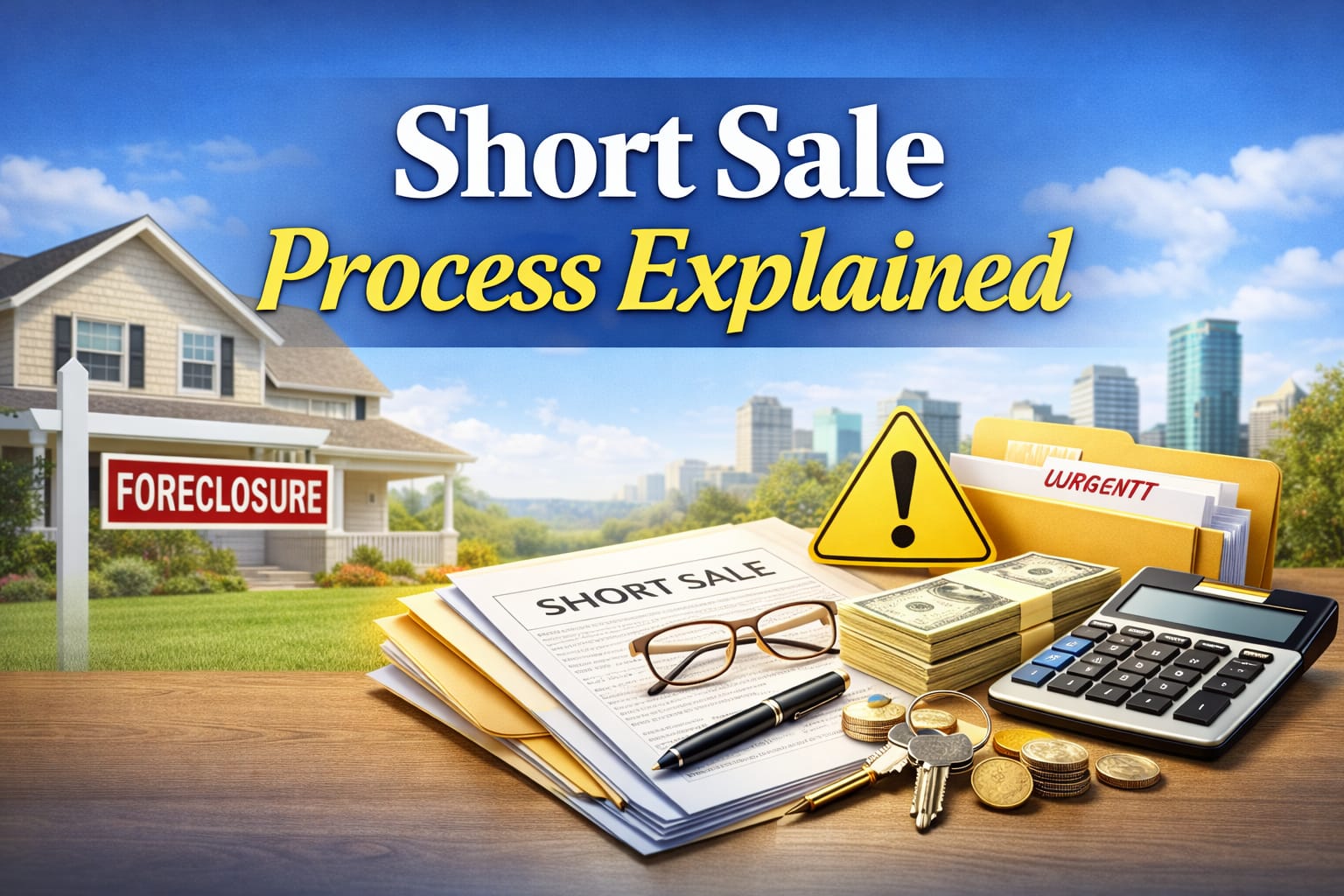
Short Sales: A Step-by-Step Guide for Orlando Homeowners
The short sale process allows an Orlando homeowner to sell their property for less than the mortgage balance with lender approval. The process includes listing the home, receiving an offer, submitting a lender package, completing a lender valuation, and waiting for approval—typically taking 3–6 months depending on the lender.What Is a Short Sale?
A short sale happens when a homeowner owes more on their mortgage than the home is worth and the lender agrees to accept less than the full balance. This option is commonly used to avoid foreclosure and can be a practical exit strategy for distressed homeowners in Central Florida.
The Short Sale Process Explained Step by Step
1. Financial Hardship Is Identified
Lenders do not approve short sales casually. You must show a legitimate hardship such as job loss, medical issues, divorce, death of a spouse, or unaffordable payment increases.
2. Hire a Qualified Short Sale Realtor
Short sales are paperwork-heavy and lender-driven. As an experienced Orlando short sale expert, I handle lender communication, timelines, and negotiations so sellers don’t make costly mistakes.
3. List the Home at Market Value
The home must be priced realistically. Lenders will not approve inflated prices or fire-sale pricing without justification.
4. Receive and Accept an Offer
The seller accepts an offer subject to lender approval. This is not a normal transaction—the lender has final say.
5. Submit the Short Sale Package to the Lender
This includes financials, hardship letter, listing agreement, executed contract, and authorization forms.
6. Lender Orders a Valuation
The lender typically orders a BPO or appraisal to determine current market value.
7. Negotiation and Approval
The lender may counter the offer, request seller contributions, or approve the sale outright.
8. Closing the Short Sale
Once approved, the transaction moves to closing just like a traditional sale—only with tighter deadlines.
Short Sale Timeline: What to Expect
| Stage | Typical Timeframe |
|---|---|
| Listing to Offer | 2–6 weeks |
| Lender Review | 60–120 days |
| Approval to Closing | 30 days |
Pros and Cons of a Short Sale
Pros
- Avoid foreclosure
- Less credit damage than foreclosure
- Potential mortgage forgiveness
- More control over the outcome
Cons
- Longer timeline
- No guaranteed approval
- Buyer uncertainty
- Extensive documentation
Common Short Sale Mistakes to Avoid
- Waiting too long to act
- Hiring an inexperienced agent
- Ignoring lender requests
- Accepting unrealistic offers
How the Short Sale Process Works in Orlando, Florida
In Orlando and across Central Florida, short sales are still common due to fluctuating home values, investor-owned properties, and rising insurance and tax costs. Local lenders often require strict pricing justification and fast responses once approval is issued.
I’ve successfully handled hundreds of short sale files and understand how local lenders, asset managers, and title companies operate here. That experience matters.
My Experience With Short Sales
I’m a Certified Distressed Property Expert with extensive hands-on experience navigating complex short sale approvals across Central Florida. I don’t hand these files to assistants—I manage them personally because details decide outcomes.
Frequently Asked Questions
How long does a short sale take?
Most Orlando short sales take 3–6 months, depending on the lender and completeness of the file.
Will I owe money after a short sale?
Many lenders forgive the deficiency, but this must be negotiated and confirmed in writing.
Does a short sale hurt my credit?
Yes, but significantly less than foreclosure.
Can I buy another home after a short sale?
Often within 2–3 years, sometimes sooner with strong compensating factors.
Do I need to be behind on payments?
No, but you must show a legitimate hardship.
Can investors buy short sale homes?
Yes, as long as the offer meets lender requirements.
Can a short sale stop foreclosure?
Yes, if started early and managed correctly.
Is a short sale better than letting the bank take the house?
In most cases, absolutely.
Next Steps: Talk to a Real Orlando Short Sale Expert
If you’re behind on payments or heading toward foreclosure, timing matters. The earlier you act, the more leverage you have.
Orlando Realty Consultants
Phone: 407-902-7750
Service Area: Central Florida
Let’s talk through your options honestly and figure out the smartest path forward.
ur future.