
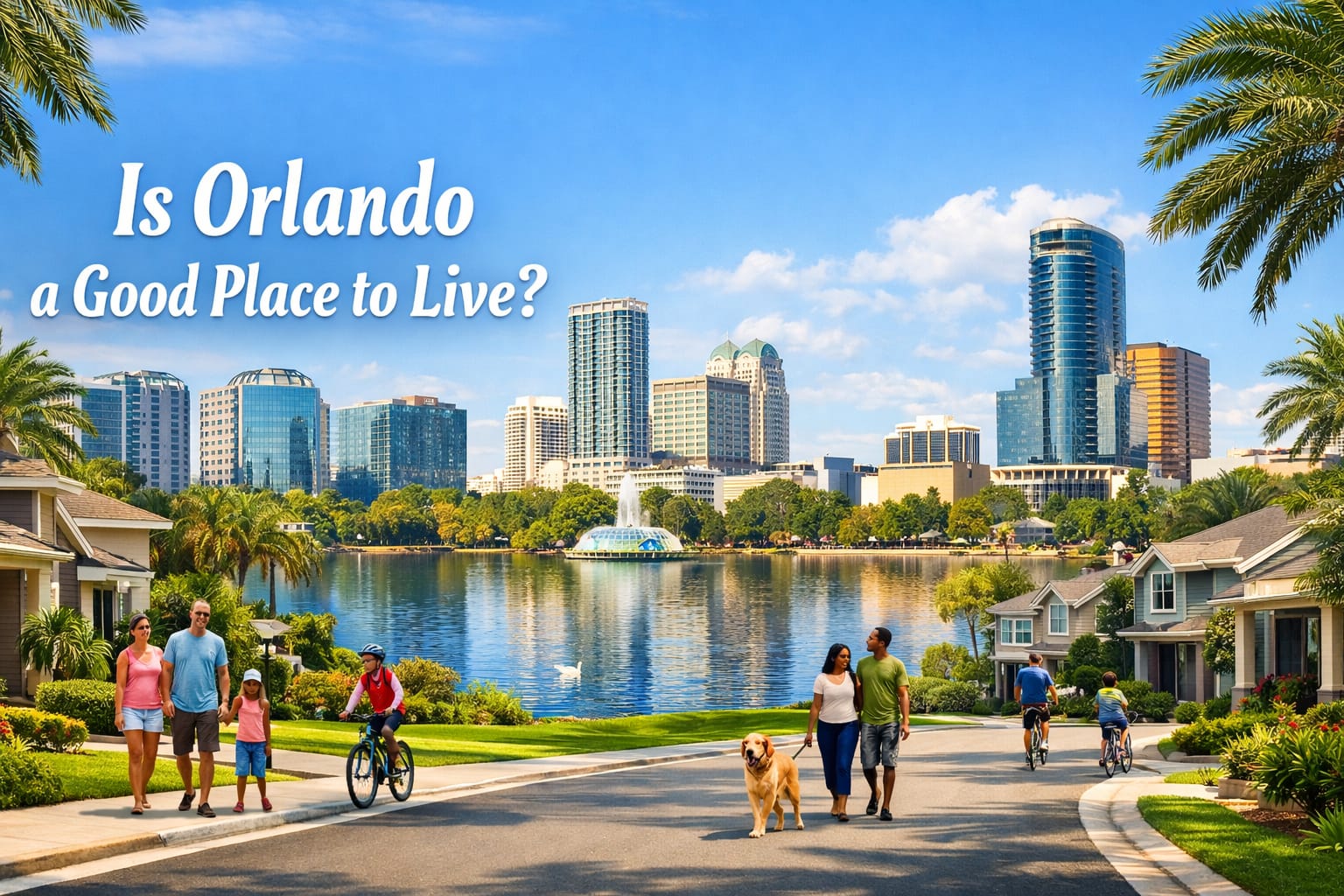
Honest Insights From a Local Orlando & Kissimmee Realtor
Thinking about moving to Orlando or Kissimmee? Here’s the straight-talk breakdown on lifestyle, housing, cost realities, and who Central Florida is (and isn’t) a great fit for.
If you’re searching “is Orlando a good place to live,” you’re probably weighing a real move—not planning a vacation. Good. Because Orlando can be a great place to live, but it’s not a perfect fit for everyone. The people who regret moving here usually had unrealistic expectations about traffic, heat, insurance, or commute times.
This guide is written from a local Realtor perspective, focused on what matters to buyers and relocating families: day-to-day lifestyle, housing reality, cost considerations, and how Orlando compares to Kissimmee when you’re deciding where to put down roots.
Why So Many People Are Moving to Orlando
Orlando keeps growing for a few simple reasons: no Florida state income tax, a big mix of employers, and a lifestyle that works for families, remote workers, and retirees. You also get a major airport, tons of dining options, and easy access to beaches without paying coastal prices.
For official city information and services, you can explore the City of Orlando website: https://www.orlando.gov/
Cost of Living in Orlando: What It’s Really Like
The cost of living conversation usually comes down to one thing: housing. Orlando isn’t “cheap Florida” anymore, but it can still be more affordable than many large metro areas—especially if you’re relocating from the Northeast or West Coast.
Housing costs vary by area (a lot)
Two homes with the same number of bedrooms can feel like completely different price points depending on location, school zoning, commute routes, and whether the community is newer construction with HOA fees. This is why “Orlando” as a single price label is misleading.
Insurance and HOA fees are real budget items
Florida homeowners should plan for meaningful insurance costs and, in many communities, HOA dues. If you’re not budgeting for these up front, you can end up house-rich and cash-poor.
Want a practical affordability checkpoint before you start touring? This guide can help: https://orlandorealtyconsultants.com/what-credit-score-do-you-need-to-buy-a-house-in-orlando/
Property taxes and homestead matter
Property taxes can differ by county and assessed values. If you’re buying a primary residence, Florida’s homestead exemption can make a difference long-term. You can review official homestead info here: https://www.floridarevenue.com/property/pages/homestead.aspx
The Orlando Housing Market Explained (Without the Hype)
Orlando isn’t one market—it’s a collection of micro-markets. Downtown-adjacent neighborhoods, master-planned suburbs, and commuter-friendly corridors all behave differently. The “right” area depends on your lifestyle and your day-to-day routes, not just the listing photos.
Renting vs buying in Central Florida
Renting can make sense if you’re new to the area and want to learn neighborhoods first. Buying can make sense if you’re planning to stay put, want stability, or you’re trying to build long-term equity. There isn’t one right answer—there’s the right strategy for your timeline.
If you want an updated buyer-focused roadmap, start here:
What Buyers Should Know in 2026
Living in Orlando vs Kissimmee: Which Is Better?
This is one of the most important decisions relocating buyers face—and most national articles don’t cover it well. Orlando and Kissimmee can both be great, but they feel different in pricing, commute patterns, and day-to-day lifestyle.
Living in Orlando
- Often best for: buyers who want closer proximity to job hubs, more established neighborhoods, and shorter drives to core Orlando amenities.
- Watch-outs: certain areas have tighter inventory in popular price points, and traffic can get intense on key corridors.
Living in Kissimmee
- Often best for: buyers who want more space for the money, families prioritizing budget, and some investors (with the right plan).
- Watch-outs: commute times vary widely by exact location, and some pockets are heavily influenced by tourism patterns.
If you want county-level info and services for Kissimmee/Osceola, start here: https://www.osceola.org/
Pros and Cons of Living in Orlando
Pros
- No Florida state income tax
- Strong variety of jobs and industries
- Year-round outdoor lifestyle (when you plan around the heat)
- Diverse neighborhoods and housing styles
- Plenty of entertainment, dining, and events
- Easy access to beaches and weekend road trips
Cons (the stuff people ignore until they move)
- Traffic: commute times can be rough depending on your corridor and work hours
- Heat & humidity: summer is real—plan for it
- Insurance: homeowners insurance can be a meaningful monthly cost
- Tourism congestion: certain areas are busier than others, especially near attractions
- Sprawl: Orlando is car-dependent in many neighborhoods
Before you buy, protect yourself with a smart checklist. This is a strong starting point: https://orlandorealtyconsultants.com/buying-a-home-in-orlando-florida-5-red-flags-you-shouldnt-ignore/
Who Orlando Is a Great Fit For (And Who It’s Not)
Orlando is a great fit if you:
- Want warm weather most of the year
- Don’t mind driving and planning around traffic
- Want diverse communities and housing options
- Prefer a metro with growth potential
- Like having lots to do without living in a “big city” like Miami
Orlando might not be your best match if you:
- Hate heat and humidity
- Want dense, walk-everywhere living as the default
- Are counting on “cheap Florida” pricing
- Need a short commute but haven’t chosen your area carefully
Is Orlando a Good Place to Live for You?
For the right person, yes—Orlando is a very good place to live. But the key is choosing a location that matches your work route, your lifestyle, and your budget reality (including insurance and HOA).
If you’re relocating and want help narrowing down areas in Orlando and Kissimmee based on commute, schools, and price range, that’s exactly what a local Realtor should do—give you the honest picture and help you avoid expensive mistakes.
Se Habla Español.