

Crescent Central Station Reviewed by City Council for Transportation Impact Fee Credits

The Orlando City Council met on February 24 to take another look at the high-end apartment complex in downtown Orlando that backs up the neighborhood’s busiest Sun Rail station. The transit-based multipurpose development seeks to win the transportation impact fee credits from the City Council. This would help site owners Rida Development Corp. save some big bucks.

Former site owner Rida to save over $2 million

Word is that Houston-based developers, Rida would save $275,839 if the Orlando City Council agrees to collect the fees in credits. Rida was the owner of the site at the corner of Livington Street and Orange Avenue where the apartment complex is now being constructed. Its ownership of the site dates back to 2008 when the site was known as the Pizzuti Block.

The main Lynx Central Station and Sun Rail commuter station of downtown Orlando is located in close proximity of the apartment complex.

According to the Orlando Sentinel, this Orlando real estate development will spread out over 6.4 acres of land and also sport a unique transit-based layout that allows residents, visitors and workers to walk through the Crescent Central Station apartment complex as they commute to and from the Sun Rail station.

What the $56 million complex is supposed to look like

Construction at the Crescent Central Station located in Orange Ave. at 480 N has been planned to be carried out in phases. The first phase of the project involves erecting a six-story high residential apartment complex with 279 apartments, an adjoining parking facility, and an open retail space spanning 12,000 square feet.

Apart from the luxury apartments and dedicated multilevel parking space that goes seven levels high, the apartment community will also sport a public park and pedestrians will be able to access the Sun Rail/Lynx station. Developers also plan to make the facility bicycle-friendly, in addition to facilitating pedestrians.

The 12,000 square feet of free space on the ground floor of the complex dedicated for retail will be owned and managed by Rida. Further, businesses that lease in or operate from the Crescent Central Station will be required to fund or at least subsidize the ridership of complex residents and employees, transiting through the station.

The initial phase of construction has been projected to cost around $56 million and real estate agents in Orlando have associated it with increased commercial and residential activities and leasing, not only in the complex itself but also in the neighborhood.
 

Let's Keep In Touch!

New ORC Form Lead

"*" indicates required fields

This field is for validation purposes and should be left unchanged.
TOC*

Orlando Real Estate Industry Basks Under the Glory of Reduced Foreclosure Rates

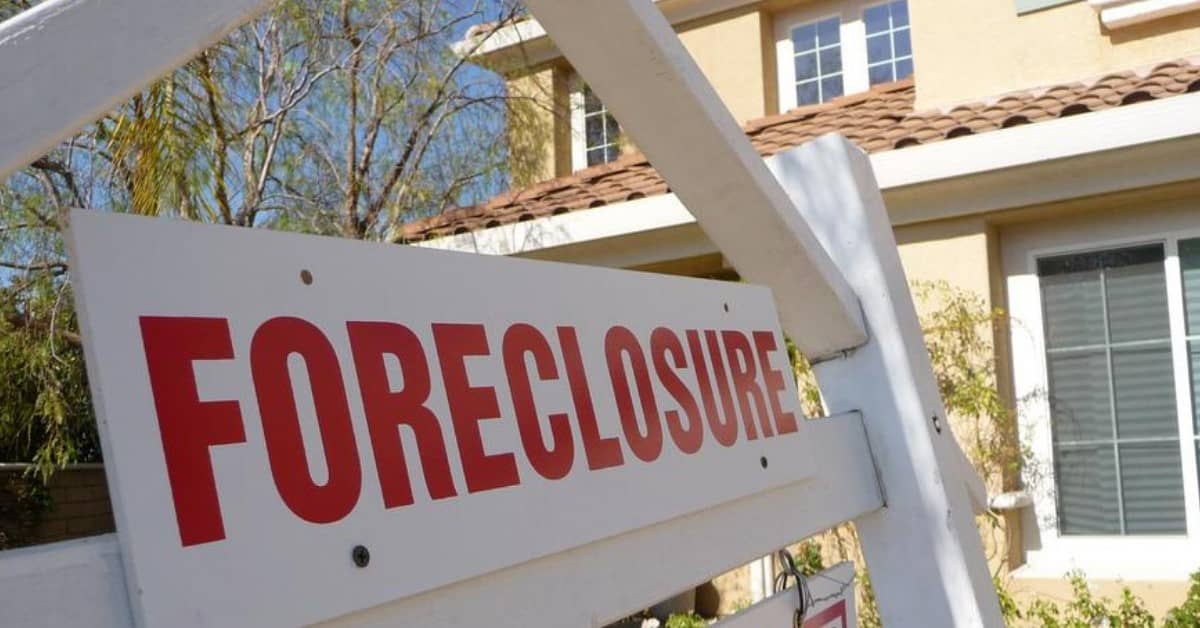
CoreLogic has some great news for Orlando realtors and the Orlando real estate industry in general. The American business intelligence agency that provides financial and real estate information and analytics to businesses and the feds, reports that the foreclosure rates of real estate properties in Metro Orlando reduced again in December 2013.

This brings in a ray of hope for real estate agents in Orlando who have been worried for quite some time due to the high rates at which properties in the city get foreclosed. Even with a  decrease in the foreclosure rates in December, Orlando still sports foreclosure rates higher than the national average.

Foreclosure rate 3.65 percent down from same time a year ago


CoreLogic reports that 6.69 percent residential properties in the Sanford-Kissimmee-Orlando area were  slapped with foreclosure in December 2013 – 3.65 percent down from the foreclosure rate in December 2012 (10.34 percent).

CoreLogic, which trades on the New York Stock Exchange as CLGX also reported that the national average of residential-property foreclosures for December 2013 was 2.09 percent. Further, the report also revealed that homeowners of the Metro Orlando area had become more regular with their mortgage payments.

The delinquency rate dropped by 4.53 percent in December 2013. CoreLogic reported an 11.04 percent of mortgage payments coming in later than 90 days in December 2013. A year ago mortgage defaulters in the Metro Orlando area peaked at 15.57 percent.

As is the case with foreclosure rates, the Metro Orlando mortgage delinquency rates top the national average of 5.03 percent this year. Back in 2012, the rate stood at 6.40 percent for the same month.

Orlando realtors anticipate improved sentiments in near future


The health of a state’s real estate market greatly influences the health of the overall economy of the state. Listing agents in Orlando reveal that reduced foreclosure rates in Metro Orlando is promising news for the Orlando real estate market because it not only signifies that the housing market is improving, it also helps boost the values of other residential properties.

Add to it the fact that lowered foreclosure, as well as mortgage delinquency rates, are elementary proof that the market is less distressed and the financial status of homeowners is improving.  You’ll know why real estate agents in Orlando are tying this news to the hopes of a stronger market and more buyer confidence in the near future.

Let's Keep In Touch!

New ORC Form Lead

"*" indicates required fields

This field is for validation purposes and should be left unchanged.
TOC*

Orlando Homes Face Tougher Mortgages

Prospective home purchasers have observed a significant price shift in house prices in the metropolitan Orlando area. This is coupled with a rise in mortgage rates and tougher mortgage rules for customers who carried substantial debt all through 2013.

Painful increase

According to Orlando realtors, Orlando homes put up for sale in the market have seen a sudden 20 percent increase in their listed price. According to Orlando Regional Realtors Association, buyers who bought a home for the first time at the fag-end of 2013 within 85 percent of the median price, and with a 10 percent down payment, were liable for an approximate monthly mortgage payment of $626, excluding insurance and taxes. This can be compared with the 2012 first-time buyers who paid just $453. As per calculations by Orlando real estate agents, the increase in mortgage payments will saddle homeowners with an extra $2,000 a year when it comes to housing expenses.

This is evident in the words of Teresa Myers, a Cocoa resident who has been searching for an Orlando house to reduce her husband’s commute time. She has informed the realtors in Orlando about her $200,000 budget and is still looking for an ideal home.

Adding to the woes of the buyer is the fluctuation in Orlando mortgage rates. The mortgage rate in Orlando has fluctuated all through 2013 for the fixed-rate 30-year mortgage, climbing from 3.46 percent in December 2012 to 4.57 percent in December 2013. According to economists, the mortgage rates in Orlando and also in the rest of the country will rise to five percent by the turn of 2015.

New mortgages harder to get

According to the US Census Bureau, homeownership in the Orlando metro area has reduced from 71 percent in 2008 to 63 percent in third quarter of 2013. Thus, a number of residents are finding it more convenient to rent a home than to own one. This makes more sense for would-be home buyers due to the new restrictions on mortgage qualifications, which were made effective from January, 2014.

New rules were introduced by the Consumer Financial Protection Bureau, which disqualify buyers from getting a standard mortgage if their credit card, auto payments and other debts totals 43 percent or more of buyer’s monthly gross income. The debt to income ratios of prospective homebuyers could reach as high as 50 percent in previous years.

Let's Keep In Touch!

New ORC Form Lead

"*" indicates required fields

This field is for validation purposes and should be left unchanged.
TOC*

Orlando Home Prices Continue to Go Up

For Orlando realtors, the upward trend is set to continue as Orlando home prices continued to go up in January to $149,950, clocking an 18.1 percent increase compared to about $127,000 in 2012. However, according to the Orlando Regional Realtor Association (ORRA), the median price in January went down 6.28 percent compared to December.

Home sales and tax exemption

For most Orlando real estate agents, sales were a little bleak with ORRA members publishing 1,800 home sales, a drop-off of 10.67 percent when compared to January 2013. When compared with December, it is a 26.32 percent decrease. According to Zola Szerencses, the chairman of the ORRA, the decline in December to January sales is partly due to the annual December rush to close sales before the year ends.

Szerencses informed that the principal financial boom of homeownership is the homestead tax exemption and owners must possess their new home before January 1 of any New Year to claim the exemption in the New Year. He also said that the interest rates rise in 2013 has worsened both years to year and month to month decline reported for January.

Metropolitan Orlando

According to a report published by Florida Realtors, residential prices increased throughout the Central Florida region during 2013. In the metropolitan area of Orlando, including the Seminole, Lake, Osceola, and Orange counties, the average price of a home increased by 20 percent to $165,000.

Nearby Orlando, the sale prices of homes in both Polk and Volusia counties were more than the rest of the state. According to Orlando real estate agents, the median price increased 17.2 percent in Volusia to $124,250. Sale prices increased 16.2 percent to the median $122,000 in Polk County.

Unequal increase

In Orlando and its adjacent areas, nominal growth was showed only by Brevard County. Prices in that area rose by 6.8 percent and reached a median of $125,000 in 2013. The sales pace was slower in Metropolitan Orlando when compared to Florida. Total sales amounted to 27,381 units of single-family homes, about 6.4 percent increase compared to 2012. Other parts of the state showed double the number of sales.

The townhome and condominium sale prices of metropolitan Orlando exhibited bigger gains than the home prices of the area. The asking price for multi-family residences in the metro area increased 25 percent during 2013 to reach the median of $95,000.  Orlando condominium prices were at their lowest about five years ago.

Let's Keep In Touch!

New ORC Form Lead

"*" indicates required fields

This field is for validation purposes and should be left unchanged.
TOC*

Florida Real Estate and Housing Markets Revel as Late Mortgage-Payment Rates Drop

According to a recent report released by the credit bureau TransUnion, Americans are taking care of the timely payments of their mortgages so much so that the rate of late home mortgage payments has reached a record five-year low. The report, released Wednesday, February 12, reveals that compared to the 5.8 percent delinquency rate in the fourth quarter of 2012, rates improved to become only 3.85 percent in the fourth quarter of 2013.

Key takeaways from the report


Apart from being lower than the rate same time last year, the late mortgage-payment rates were also lower than the same year’s third-quarter rates, when 4.09 percent of homeowners were at least 2 months late in their mortgage payments.

TransUnion reveals that the last time mortgage-payment delinquency rates were lower than the current rates, was five years ago – in the second quarter of 2008. And even though the current rates are still twice as much as the rates in 2007, before the housing bubble burst, TransUnion holds that foreclosures will continue to thin down and delinquency rates reduce even further.

The growing job market, lower interest rates, and tight supply are reasons behind the improvement


The improving job market, state and federal government incentives to revamp home loans and make them more affordable as well as rising home values are at the core of this improvement.

Real estate agents in Orlando say that rise in property values has been a staple for most U.S. states over the past couple of months and struggling homeowners have also found comfort at the hands of increased job opportunities. The interest rates on home loans have reduced, lending a hand to the housing rebound which was primarily fueled by the tight availability of homes for sale.

Further, the U.S. unemployment rates have dropped and though slow, the growth of jobs has been steady. With several federal and state incentives like that by Florida, job prospects are only getting better.  Upcoming housing markets like those in Florida have greatly benefited from these incentives. Top Orlando realtors, for example, reveal the Orlando real estate industry found several buyers because of Florida’s incentive to entrepreneurs to set up offices and jobs in the state.

The low rates of late mortgage payments have another key driver – the discount on unhealthy home loans that were primarily issued before 2008. Most of these risky mortgages, that went unpaid for a long time were either sealed off and foreclosed by banks or sold to other wealthy buyers. Post the economic downturn of 2008, banks became more strict in lending. Only strong loans that banks were confident about have been passed since then – accounting for a major reason why late payments dropped sharply.

Let's Keep In Touch!

New ORC Form Lead

"*" indicates required fields

This field is for validation purposes and should be left unchanged.
TOC*