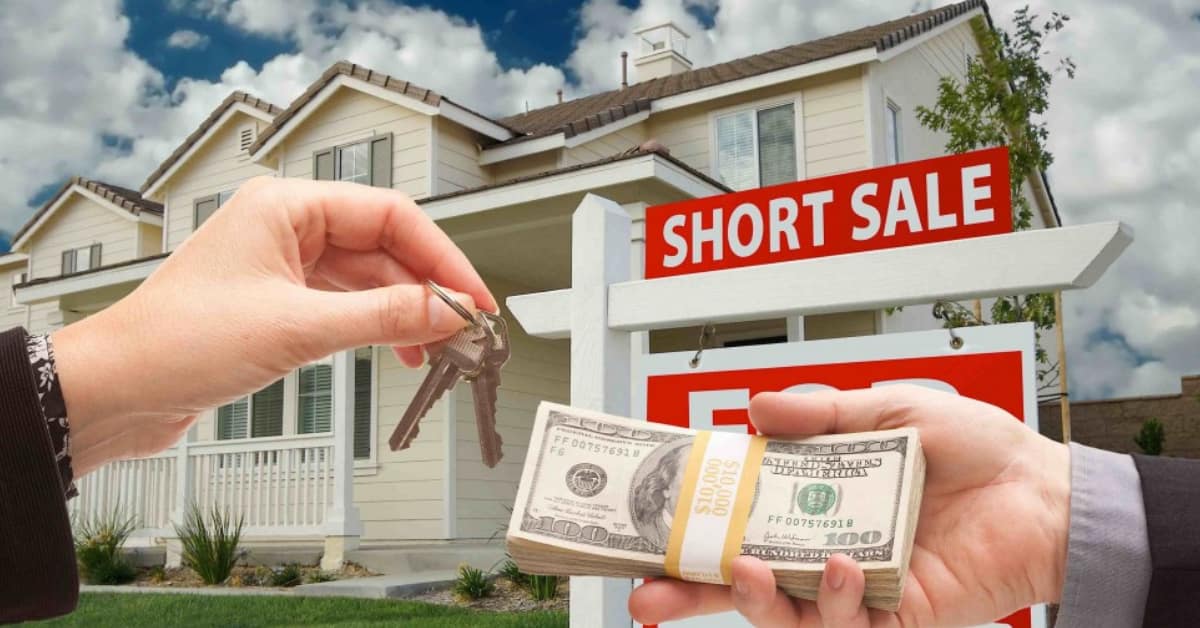
Do You Need An Attorney To Short Sale?

Do You Need An Attorney To Short Sale? 407-902-7750 Video

There’s a common misconception among distressed homeowners that you need to hire an attorney in order to complete a short sale on your home. The truth is that you don’t need to hire an attorney in order to complete a short sale.  The lender does however require that a licensed real estate agent represent the seller in order for a short sale to be approved.

There are some cases where you would want to consult with an attorney such as;  if there’s title issues, the property’s in probate or if there’s a Bankruptcy involved, etc.

Now with that being said, most of the time you don’t need to hire an attorney to short sale your home.

One of the most popular reasons why people hire a short-sale realtor instead of an attorney is the cost. Attorneys can charge you thousands of dollars to do your short sale, whereas a licensed realtor does it for free.

Wouldn’t you rather save your money instead of turning it over to a lawyer?

A realtor only gets paid if the short sale closes, and they get paid by the lender,it doesn’t cost the homeowner a dime. Not only that, but most of the time we get you cash back a closing. We’ve gotten our clients anywhere from $3,00 to $30,000.00 back at closing.

There are currently thousands of Orlando homeowners that are looking for help with their situation. The process isn’t just hard, It’s scary. We’re talking about potentially getting kicked out of your home. This is why it’s crucial that you get help from a proven Orlando Short sale Expert.

We understand this which is why we are devoted to helping people that are facing foreclosure and financial hardship to find solutions to their real estate needs.

If you or someone you know needs help with a short sale. visit our website at https://orlandorealtyconsultants.com/short-sales/ or just give us a call at 407-902-7750 for a Free consultation.


Orlando short sale expert

Let's Keep In Touch!

New ORC Form Lead

"*" indicates required fields

This field is for validation purposes and should be left unchanged.
TOC*

What if my lender won’t accept a short sale? – Orlando Realtors

Short Sales are not Guaranteed!

It’s important to be aware that your lender has absolutely no obligation to agree to a short sale.  Also, there are a handful of banks that will agree to a short sale if the homeowner is current however,  most banks won’t even consider it unless the homeowner is at least 30 days past due on their mortgage payment. Either way, it goes, you just won’t know whether or not your lender will accept a short sale until you try. You should also know that a short sale can take several months and even a year to complete depending on who the mortgage holder is and what type of loan it is.

In the event that your lender does not agree to a short sale, there are several other options available to you in the event that your lender doesn’t agree to a short sale.

Other options besides a short  sale

1- Loan Modification– This is when the lender adjusts the terms of your loan by either adjusting the principal balance of the note or by lowering the monthly payment to make it more affordable to the homeowner. Most of the time the terms of a loan modification aren’t worth agreeing to.

2- Deed-in-Lieu- This is the process by which the homeowner signs the property back over to the lender and this is also considered by many a voluntary foreclosure. Unfortunately, it also shows up on your credit as a foreclosure.

3-Bankruptcy-  There are two different types of bankruptcy; Chapter 7 and chapter 13. Since I am not an attorney I will just give you the basics. A chapter 7 bankruptcy is the liquidation of assets so that debtors can get paid a portion of what’s owed to them and a Chapter 13 is basically a reorganization of debts in which the debtor has a chance to work out an arrangement with his or her debt holders.

4- Let it go to Foreclosure- This is one option that I would never recommend to anyone. If you just let the property go to foreclosure, then you’re just giving up and when you give up, you give up all control of your situation. There’s a common belief that if you let your property go to foreclosure, all of your debt will be forgiven and that couldn’t be further from the truth. As a matter of fact,  the opposite will probably happen and the lender will slap you with a deficiency judgment between what you owe the lender and what the property sold for at the auction. 

If you or someone you know is behind on their mortgage, consult with a short sale expert and find out what the best option for you is.

Orlando short sale expert

Let's Keep In Touch!

New ORC Form Lead

"*" indicates required fields

This field is for validation purposes and should be left unchanged.
TOC*

The Truth About How a Short Sale Will Affect Your Credit Score

So exactly how will a short sale impact your credit score?  The short answer is a short sale can have less of an effect on your credit score than a foreclosure. But, it must be done correctly.

Should I do a short sale?

Short sales can happen if a lender agrees to accept less than the amount owed against the home because there is not enough equity in it to pay all costs of the sale.

Firstly, it’s important to get legal and tax advice before making any decision. A real estate agent experienced in Orlando short sales can be of invaluable help to you as you negotiate with your lender. It’s important to note that not all lenders will agree to a short sale.

Although there are a few lenders that will agree to a short sale if the homeowner is current, most lenders won’t even consider a short sale unless the mortgage holder is at least 30 days behind on their payment.

What tips should I know for negotiating my short sale.

When negotiating a short sale it’s important to be aware that there is no guarantee that the lender will accept the short sale offer. You should also know that short sales can take several months to complete sometimes depending on who the lender is.

If the lender does not agree to a short sale there are other options available to the homeowner such as a “deed in lieu” which is basically a voluntary foreclosure in which you sign the property back over to the bank.

Other options include trying to negotiate a loan modification or filing for bankruptcy. If neither of these options work than the property will most likely be foreclosed on and sold at public auction to the highest bidder.

If your request is approved, ask your lender to report the short sale as “paid in full,” as part of the negotiation.

So what’s the impact on my credit score?

Many sources report that a short sale has about the same impact on your credit score as a foreclosure when the seller is in arrears; however, that’s not always the case.  With some short sales, sellers report that their credit score only dropped by 100 points.

The biggest advantage of a short sale is that you will be able to qualify to buy another home within two years as opposed to five to seven years after a foreclosure.

Talk to an Orlando real estate agent experienced in short sales to discuss the possibility of doing a short sale of your home.

Top Orlando Realtors

Let's Keep In Touch!

New ORC Form Lead

"*" indicates required fields

This field is for validation purposes and should be left unchanged.
TOC*

Orlando Homeowners Rush to Short Sale Their Homes before the Mortgage Forgiveness Debt Relief Act of 2007 Expires

Orlando homeowners are in a panic to sell their homes before the end of the year when the Mortgage Tax Debt Relief Act of 2007 is set to expire.

There’s a chance that the Act could be extended but, if Congress fails to extend the Mortgage Forgiveness Debt Relief Act of 2007 before the end of the year, homeowners will have to start paying income taxes on the portion of their mortgage that is currently being forgiven in a foreclosure, short sale or principal reduction.

That would mean that a homeowner who sells a $150,000 home for $100,000 in a foreclosure, could be taxed by the IRS on the remaining $50,000. If you’re in the 25 per cent tax bracket that would mean paying $12,500 in taxes and similar taxes would apply to forgiven amounts in short sales and principal reductions.

Consequently, Orlando homeowners are rushing to short sell their homes before the end of the year. More than 50,000 homeowners face foreclosure each month so, should the tax breaks expire, a large number of mortgage borrowers would be affected.

Over the past three years, the number of short sales has tripled to about a half million per year. Under the terms of the foreclosure abuse settlement, about one million borrowers may have their mortgage debt lowered through principal reductions over the next couple of years. The cost of the settlement would be $25 billion.

It is speculated that, now that the election is over, there will be very little legislation moving forward before the end of the year. Plus, the cost of a one-year extension is estimated at $1.3 billion, which makes it a huge point of contention.

Others feel that Congress will act before the end of the year because both houses agree that the Mortgage Tax Debt Relief Act needs to be renewed and it’s only a matter of how quickly the process will move forward.

Some Orlando homeowners may have nothing to worry about, as not all borrowers with forgiven mortgage debt will have to pay extra taxes. Even if the Mortgage Forgiveness Debt Relief Act expires on December 31st, special circumstances could exempt them. Specifically, no taxes would be owed if a debt is discharged in a bankruptcy or in the case of a homeowner being insolvent, that is, they had more debt than assets at the time the debt was forgiven.

In addition, certain states treat foreclosures differently so that some borrowers are protected against paying the tax.


Orlando short sale expert

Let's Keep In Touch!

New ORC Form Lead

"*" indicates required fields

This field is for validation purposes and should be left unchanged.
TOC*

Fixing your credit after an Orlando short sale

Getting your credit score back on track after your short sale is complete


The local economy is recovering “slowly but surely”, the housing market is getting stronger and the term  “Orlando short sale” has become a household name. Delinquent homeowners generally elect to pursue a short sale as opposed to going through foreclosure or bankruptcy.
Short sales have become so common in fact that it’s hard to find someone that hasn’t heard of a short sale as opposed to just a few short years ago when most people had no clue what a short sale was.


A short sale is when a mortgage holder tries to sell their property for less than what is owed. The delinquent homeowner must first get permission from their lender in order to pursue the short sale. Homeowners will typically seek out a short sale when they can no longer afford to pay the mortgage or the house owes much more than what the property is worth. Banks have come to the realization that they actually lose more money by taking a property to foreclosure as opposed to a short sale.


Many people will argue that a short sale will affect you far less than a foreclosure but the truth is that whether a seller does a short sale or foreclosure the points you lose are about the same. Fair Issac says the average points lost on a FICO score are as follows:

30 days late: 40 to 110 points
90 days late: 70 to 135 points
Foreclosure, short sale or deed-in-lieu: 85 to 160
Bankruptcy: 130 to 240


People who Opt for an Orlando short sale will have a much better chance of qualifying for a mortgage in the future.

It depends a lot on how the lender records or reports the sale once the transaction is complete. A short sale is usually recorded by the lender as a settlement as opposed to a paid debt. When the lender reports the sale as “settled”, it appears on a credit report as the lender accepting less than what  was owed. This will always have a negative affect on credit scores. However, if you’re able to get the lender to record the sale as “paid”, then your credit score will not suffer any further. The chances of this happening are slim to none and it takes some really good negotiating skills by your Orlando realtor with the short sale lender in order to accomplish this improbable task.


According to some mortgage brokers that I work with, it’s much easier to get someone a loan that has a short sale on their credit as opposed to having a foreclosure on their credit, even after several years have passed. The best thing to do once your short sale has gone to closing, is to contact several of these Credit repair companies and find out what they are offering. My suggestion, as always would be to  Google “credit repair companies” and contact all the companies that appear on page 1. Credit repair has become very competitive and most companies will work with you on an affordable payment plan.


Orlando short sale expert

Let's Keep In Touch!

New ORC Form Lead

"*" indicates required fields

This field is for validation purposes and should be left unchanged.
TOC*